

Picture this.
The first rays of sunlight slowly filter through towering Sal trees. A cool breeze carries the earthy scent of the forest after a chilly night. Your safari jeep moves quietly along a narrow jungle trail while everyone scans the dense woodland in silence.
Suddenly, the driver stops.
Fresh tiger pugmarks cross the dusty road.
A herd of spotted deer freezes just ahead. Langurs begin calling from the treetops. Your guide whispers, "The tiger could be nearby."
Whether you actually see the tiger or not, this moment stays with you forever.
This is the magic of Jim Corbett National Park—India's oldest national park and one of the country's most iconic wildlife destinations.
But here's what many first-time visitors don't realise:
The success of your Jim Corbett trip depends more on choosing the right season than choosing the right resort.
Every month transforms the forest in a different way.
During summer, wildlife gathers near rivers and waterholes, increasing the chances of unforgettable sightings. Winter brings pleasant weather, crystal-clear mornings, and incredible birdwatching opportunities. The monsoon paints the jungle in vibrant shades of green, creating breathtaking landscapes that few travellers ever experience.
That is why asking "When should I visit Jim Corbett?" is one of the smartest questions you can ask before planning your journey.
In this detailed guide, you'll discover:
- The best month to visit Jim Corbett based on your travel style.
- Which season offers the highest chances of spotting a Royal Bengal Tiger.
- When the weather is most comfortable for families and couples.
- The ideal months for birdwatching and wildlife photography.
- Safari planning tips from experienced local guides.
- Common mistakes that first-time visitors should avoid.
- Practical travel advice to help you make the most of your trip.
Planning your complete Corbett holiday? Explore our Jim Corbett Tour Packages for customised wildlife experiences, comfortable stays, and local travel assistance.
Why Choosing the Right Season Matters
Many travel blogs simply recommend a few "best months" without explaining why those months are special.
The reality is that Jim Corbett is not a destination that looks or feels the same throughout the year.
It changes with every season.
The forests become denser after the monsoon. Rivers swell with fresh water. Grasslands turn emerald green, and wildlife adapts its daily routine to changing temperatures.
As summer approaches, many smaller water sources begin to dry up. Animals naturally gather around permanent rivers and watering holes, making them easier to observe during safaris.
Winter creates a completely different atmosphere.
Cold mornings bring soft mist across the grasslands, migratory birds arrive from distant regions, and the cool weather makes long jeep safaris far more comfortable.
Each season offers something unique.
That's why experienced wildlife travellers never ask,
"Is Jim Corbett worth visiting?"
Instead, they ask,
"What do I want to experience in Jim Corbett?"
Because your answer determines the best time to visit.
Quick Answer: When Is the Best Time to Visit Jim Corbett?
If you're looking for a short answer before reading the complete guide, here's a quick overview:
- Pleasant Weather: November to February
- Tiger Sightings: April to June
- Wildlife Photography: March to June
- Bird Watching: November to March
- Honeymoon: October to February
- Family Vacation: November to February
- Budget-Friendly Trip: July to September
- Nature & Green Landscapes: July to September
However, these recommendations only tell part of the story.
Let's explore what each season offers in detail.
About Jim Corbett National Park
Nestled in the foothills of the Himalayas near Ramnagar, Uttarakhand, Jim Corbett National Park is India's first national park, established in 1936.
Originally known as Hailey National Park, it was later renamed in honour of the legendary conservationist and hunter-turned-naturalist Jim Corbett, whose efforts played a significant role in wildlife conservation across northern India.
Today, the park forms the heart of the Corbett Tiger Reserve, one of the most successful tiger conservation projects in the country.
Spread across more than 520 square kilometres, the park features an extraordinary mix of landscapes, including:
- Dense Sal forests
- Open grasslands
- Riverine belts
- Hills and valleys
- Seasonal streams
- Wetlands
This remarkable diversity supports an equally impressive range of wildlife.
- Royal Bengal Tiger
- Asian Elephant
- Leopard
- Sloth Bear
- Sambar Deer
- Chital (Spotted Deer)
- Barking Deer
- Wild Boar
- Gharial
- Mugger Crocodile
- More than 600 bird species
Beyond wildlife, Jim Corbett has become one of North India's most popular destinations for luxury jungle resorts, family holidays, photography tours, birdwatching, adventure travel and weekend getaways.
Before planning your trip, you can also explore our complete Jim Corbett Safari Booking Guide to understand safari zones, permits, timings, and the booking process.
Why Every Month Offers a Different Jim Corbett Experience
One of the biggest misconceptions about Jim Corbett National Park is that there's only one "best" time to visit. In reality, the park transforms dramatically with every season. The landscape, wildlife behaviour, weather, photography conditions, and even the overall safari experience change from month to month.
That means the perfect time to visit depends entirely on what kind of traveller you are.
Are you dreaming of spotting a Royal Bengal Tiger?
Do you want to enjoy cool weather with your family?
Are you planning a romantic getaway surrounded by forests?
Or are you a wildlife photographer chasing that once-in-a-lifetime shot?
Your answer determines the best season for your Jim Corbett adventure.
Let's explore each season in detail.
Winter Season (November to February): Best for Families, Couples & First-Time Visitors
If you're visiting Jim Corbett for the very first time, winter is arguably the most comfortable season.
The days remain pleasant, mornings are misty, and evenings carry a refreshing chill. Unlike many parts of North India, the weather here is ideal for spending long hours outdoors.
The forest looks peaceful during winter. Golden sunlight filters through the tall Sal trees, migratory birds arrive from different parts of the world, and the cool climate makes every safari enjoyable.
For families travelling with children or senior citizens, this season offers the perfect balance between comfortable weather and memorable wildlife experiences.
Weather
- Temperature: 5°C to 25°C
- Cool mornings and evenings
- Pleasant afternoons
- Low humidity
- Clear skies on most days
Why Winter Is So Popular
Winter is considered the peak tourist season for several reasons.
The pleasant climate allows visitors to enjoy both morning and evening safaris without worrying about extreme temperatures. Birdwatchers also flock to Jim Corbett during these months because hundreds of migratory bird species can be seen around rivers, grasslands, and forest edges.
If you're planning a winter holiday, check out our curated Luxury Resorts in Jim Corbett for the best riverside and jungle stay experiences.
Summer Season (March to June): The Best Time for Tiger Sightings
Ask any experienced safari guide in Jim Corbett about the best season for wildlife sightings, and chances are they'll point towards summer.
At first, this surprises many travellers.
"Why would anyone choose to visit during the hottest months?"
The answer lies in animal behaviour.
As temperatures rise, many small water sources inside the forest begin to dry up. Wildlife naturally starts gathering around permanent rivers, ponds, and watering holes.
This predictable movement significantly improves the chances of spotting animals during a safari.
The forest also becomes less dense as many trees shed their leaves, making it easier to see deeper into the jungle.
This is why April and May are often considered the best months for tiger sightings in Jim Corbett.
Weather
- Temperature: 20°C to 40°C
- Hot afternoons
- Dry climate
- Excellent visibility inside the forest
Why Wildlife Enthusiasts Love Summer
Summer is not just about tigers.
During this season, visitors frequently encounter elephants, deer, wild boars, peacocks, crocodiles, and many other species near water sources.
Professional wildlife photographers also prefer this period because the dry landscape provides cleaner backgrounds and better visibility for capturing animals in their natural habitat.
If you're serious about wildlife photography, summer offers some of the year's best opportunities.
Monsoon Season (July to September): The Forest's Most Beautiful Avatar
The arrival of the monsoon completely changes the personality of Jim Corbett. After weeks of summer heat, the first rains breathe new life into the forest.
- Dry grasslands turn vibrant green.
- Streams begin flowing again.
- The air becomes cooler and fresher.
- The jungle feels alive.
Although several core safari zones remain closed during this period to protect wildlife and maintain the ecosystem, the surrounding region becomes incredibly scenic.
Many travellers combine Corbett with nearby destinations like Nainital, Bhimtal, and Mukteshwar for a complete Uttarakhand holiday.
Weather
- Temperature: 22°C to 34°C
- Moderate to heavy rainfall
- High humidity
- Lush green landscapes
Why You Shouldn't Ignore the Monsoon
Many blogs suggest avoiding Jim Corbett during the rainy season. That advice is only partially true.
If your primary objective is wildlife photography or tiger sightings, monsoon may not be ideal.
However, if you simply want to experience Uttarakhand's natural beauty, enjoy peaceful riverside resorts, breathe fresh mountain air, and avoid peak-season crowds, this season has its own charm.
It's also a great time to find attractive hotel deals and enjoy a quieter atmosphere.
Month-wise Weather Guide
Choosing the right month becomes much easier when you understand what each one offers.
January
The coldest month of the year. Expect misty mornings, clear afternoons, excellent birdwatching, and comfortable safaris.
Ideal for: Families, couples, birdwatchers.
February
Winter begins to soften, making outdoor activities even more enjoyable. Wildlife remains active, and the weather is nearly perfect.
Ideal for: First-time visitors and photographers.
March
The transition from winter to summer begins. Trees gradually shed leaves, improving visibility inside the forest.
Ideal for: Safari lovers and wildlife enthusiasts.
April
One of the finest months for tiger sightings. Animals frequently visit rivers and waterholes.
Ideal for: Wildlife photographers.
May
The hottest month—but also one of the most rewarding for safari enthusiasts. Visibility remains excellent.
Ideal for: Experienced wildlife travellers.
June
The final month before the monsoon. Wildlife activity remains good, and visitor numbers begin to decrease.
Ideal for: Budget-conscious travellers looking for a quieter experience.
July – When the Forest Comes Alive
With the arrival of the monsoon, Jim Corbett transforms into a lush green paradise. The dry brown forests of summer suddenly become vibrant with fresh leaves, flowing streams, and mist-covered hills.
While many travellers assume July isn't worth visiting, that's only half the story.
Yes, several core safari zones remain closed during the monsoon as part of the Forest Department's annual conservation efforts. This allows wildlife to breed undisturbed and helps maintain the delicate ecosystem.
However, the areas surrounding Jim Corbett become incredibly beautiful during this season.
If your idea of a holiday includes waking up beside a river, sipping hot tea while listening to rainfall, enjoying luxury resorts, and spending peaceful evenings surrounded by nature, July can be surprisingly rewarding.
Weather
- Temperature: 24°C–33°C
- Moderate to heavy rainfall
- Humid but refreshing
- Extremely green landscapes
Best For
- Couples
- Nature lovers
- Luxury resort stays
- Weekend getaways
- Photography enthusiasts
Local Tip
Many riverside resorts along the Kosi River offer breathtaking monsoon views. Sitting on the balcony with clouds drifting across the hills is an experience many repeat visitors look forward to every year.
August – Jim Corbett's Most Underrated Month
August is perhaps the least appreciated month among first-time travellers—but many locals consider it one of the most beautiful times to experience the region.
The forest is at its greenest.
Butterflies, birds, wildflowers, and flowing streams create a completely different atmosphere from the busy safari season.
Instead of chasing wildlife, August invites you to slow down and enjoy nature.
If you're looking for a peaceful holiday away from crowded tourist destinations, this month deserves serious consideration.
Weather
- Temperature: 23°C–32°C
- Frequent showers
- High humidity
- Spectacular greenery
Best For
- Nature retreats
- Couples
- Digital detox holidays
- Monsoon photography
September – The Hidden Gem of the Year
As rainfall gradually decreases, September becomes one of the most pleasant months around Jim Corbett. The forest remains lush after the monsoon, waterfalls continue flowing, and the skies begin clearing.
This creates ideal conditions for landscape photography. Hotel prices also remain relatively reasonable compared to the upcoming peak season.
Weather
- Temperature: 22°C–31°C
- Pleasant climate
- Reduced rainfall
- Fresh greenery
Why Visit in September?
Travellers who prefer peaceful vacations without heavy tourist crowds often choose September. You'll enjoy cleaner air, quieter surroundings, and excellent resort experiences.
Looking to extend your trip? Explore our Uttarakhand Tour Packages covering Jim Corbett, Nainital, Mukteshwar, Ranikhet, and Kausani.
October – The Beginning of Peak Season
October marks the return of safari season in full swing.
The forests are still green after the monsoon, but rainfall has almost disappeared. Wildlife activity increases, the weather becomes comfortable, and visibility improves.
Many experienced travellers believe October offers the perfect balance between beautiful landscapes and enjoyable safari conditions.
Weather
- Temperature: 18°C–30°C
- Comfortable days
- Cool evenings
- Clear skies
Why October is Highly Recommended
- Pleasant weather
- Fresh post-monsoon scenery
- Great photography
- Comfortable jeep safaris
- Ideal for families and couples
November – One of the Best Months to Visit Jim Corbett
If someone asks local safari guides to recommend just one month, November often appears near the top of the list.
The weather is nearly perfect.
Morning safaris are cool and refreshing, afternoons remain pleasant, and migratory birds begin arriving in large numbers. This month is excellent for travellers who want to enjoy every aspect of Jim Corbett—not just wildlife.
Weather
- Temperature: 10°C–26°C
Perfect For
- Families
- Birdwatchers
- Couples
- Nature photographers
- Weekend holidays
December – A Winter Wonderland
December brings festive celebrations to Jim Corbett.
Many resorts host Christmas and New Year events, making it one of the busiest months of the year. Morning mist, chilly weather, and golden winter sunlight create unforgettable safari experiences.
The atmosphere feels magical, especially for families and honeymoon couples.
Weather
- Temperature: 5°C–22°C
Why Visit in December?
- Pleasant winter climate
- Excellent birdwatching
- Luxury resort experiences
- Holiday celebrations
- Comfortable sightseeing
Tip: Since December is a peak travel month, book your safari permits and accommodation several weeks in advance.
Which Month Is Best for You?
If Your Dream Is Spotting a Tiger
Visit between April and June.
During summer, wildlife gathers around rivers and waterholes, increasing the chances of memorable sightings. While tiger sightings can never be guaranteed, experienced guides agree that these months generally offer the best opportunities.
If You're Travelling with Family
Choose November to February.
The pleasant weather makes jeep safaris more comfortable for children and senior citizens, and the overall travel experience is much more relaxed.
If You're Planning a Honeymoon
The months from October to February offer romantic weather, peaceful forest surroundings, luxury riverside resorts, and stunning sunsets.
Many couples combine their Jim Corbett trip with nearby destinations such as Nainital or Bhimtal for a complete Uttarakhand holiday.
Couples often pair their Corbett stay with our Nainital Tour Packages or Bhimtal Tour Packages for a romantic mountain getaway.
If You're a Wildlife Photographer
Professional photographers usually prefer March, April, and May.
Dry vegetation improves visibility, and animals remain more active around permanent water sources. Early morning safaris during these months often produce the best wildlife photographs.
If You're Travelling on a Budget
Consider visiting between July and September.
Although safari options may be limited in some zones, you'll often find attractive discounts on resorts and enjoy a quieter, more peaceful atmosphere.
If You Love Birdwatching
Visit between November and March.
Jim Corbett is home to more than 600 species of birds, including many migratory visitors during winter.
For bird lovers, this season is nothing short of spectacular.
A Local Insight That Most Travel Blogs Miss
Most first-time visitors arrive with one goal—to see a tiger.
There's nothing wrong with that.
But Jim Corbett is much more than a tiger reserve.
Take a moment to watch a herd of elephants crossing the Ramganga River.
Listen to the alarm calls of langurs echoing through the forest.
Notice the vibrant plumage of a kingfisher diving into the water or a crested serpent eagle soaring overhead.
These moments often become more memorable than a fleeting tiger sighting.
The true beauty of Jim Corbett lies not in checking an animal off your bucket list, but in experiencing a living, breathing forest that changes every single day.
Understanding Jim Corbett Safari Zones
One of the biggest mistakes first-time visitors make is assuming that every safari in Jim Corbett offers the same experience.
In reality, the park is divided into several safari zones, and each one has its own unique landscape, wildlife density, entry gate, and overall experience.
Choosing the right safari zone is just as important as choosing the right season.
Let's take a closer look.
Dhikala Zone – The Heart of Jim Corbett
If Jim Corbett has a crown jewel, it's undoubtedly Dhikala Zone.
Spread across vast grasslands, dense forests, riverbanks, and open valleys, Dhikala offers one of the richest wildlife experiences in India.
Many wildlife filmmakers, researchers, and photographers consider this zone the best part of Corbett Tiger Reserve.
Here, visitors have opportunities to spot:
- Royal Bengal Tiger
- Asian Elephant
- Leopard
- Hog Deer
- Sambar
- Crocodiles
- Jackals
- Hundreds of bird species
Unlike other safari zones, Dhikala also offers breathtaking panoramic views of the Ramganga Reservoir, making every safari feel cinematic.
Best For
- Wildlife photographers
- Nature lovers
- Experienced safari travellers
- Multi-day jungle stays
Local Insight: If you're serious about wildlife, staying overnight inside the Dhikala Forest Rest House is an unforgettable experience. Waking up to the sounds of the jungle before sunrise is something very few visitors ever get to experience.
Bijrani Zone – A Favourite Among Tiger Enthusiasts
Located close to Ramnagar, Bijrani is one of the most sought-after safari zones in Jim Corbett.
Its mix of dense Sal forests and open grasslands creates an excellent habitat for tigers and other wildlife.
Because of its accessibility and healthy wildlife population, Bijrani is often recommended to first-time visitors.
Best For
- Tiger sightings
- Morning jeep safaris
- Wildlife photography
- Families
The terrain here offers excellent visibility during summer, making it one of the most rewarding zones for wildlife enthusiasts.
Jhirna Zone – A Year-Round Safari Experience
Unlike several other safari zones that may close during the monsoon, Jhirna Zone generally remains open throughout the year, subject to weather and Forest Department regulations.
Its dry deciduous forests are home to:
- Sloth Bears
- Wild Elephants
- Deer
- Wild Boar
- Leopards
- Numerous bird species
Because it remains accessible for much of the year, Jhirna is an excellent option for travellers visiting outside the traditional peak season.
Dhela Zone – A Hidden Wildlife Treasure
Dhela is one of the newer eco-tourism zones within the Corbett landscape, but it has quickly become popular among wildlife enthusiasts.
The forests here are quieter, less crowded, and incredibly rich in biodiversity.
Visitors often encounter:
- Elephants
- Deer
- Jackals
- Peacocks
- Monitor Lizards
- Numerous bird species
Dhela is perfect for travellers who prefer peaceful safaris over crowded tourist routes.
Garjia Zone – A Scenic Jungle Experience
Named after the famous Garjia area near Ramnagar, this zone combines beautiful forest landscapes with diverse wildlife.
It's ideal for travellers looking for a balanced safari experience that includes nature, photography, and wildlife.
The nearby Garjiya Devi Temple also makes it a popular stop for families visiting Jim Corbett.
Which Safari Zone Offers the Best Tiger Sighting?
This is probably the most frequently asked question.
The honest answer is:
No safari zone can guarantee a tiger sighting.
Tigers are wild animals. They move freely across large territories, and their movements depend on weather, prey availability, and natural behaviour.
However, wildlife enthusiasts generally consider Dhikala and Bijrani among the strongest choices for tiger sightings because of their habitat, prey base, and historical sighting records.
Instead of focusing only on one zone, experienced travellers often book multiple safaris in different zones to increase their chances of encountering a wider variety of wildlife.
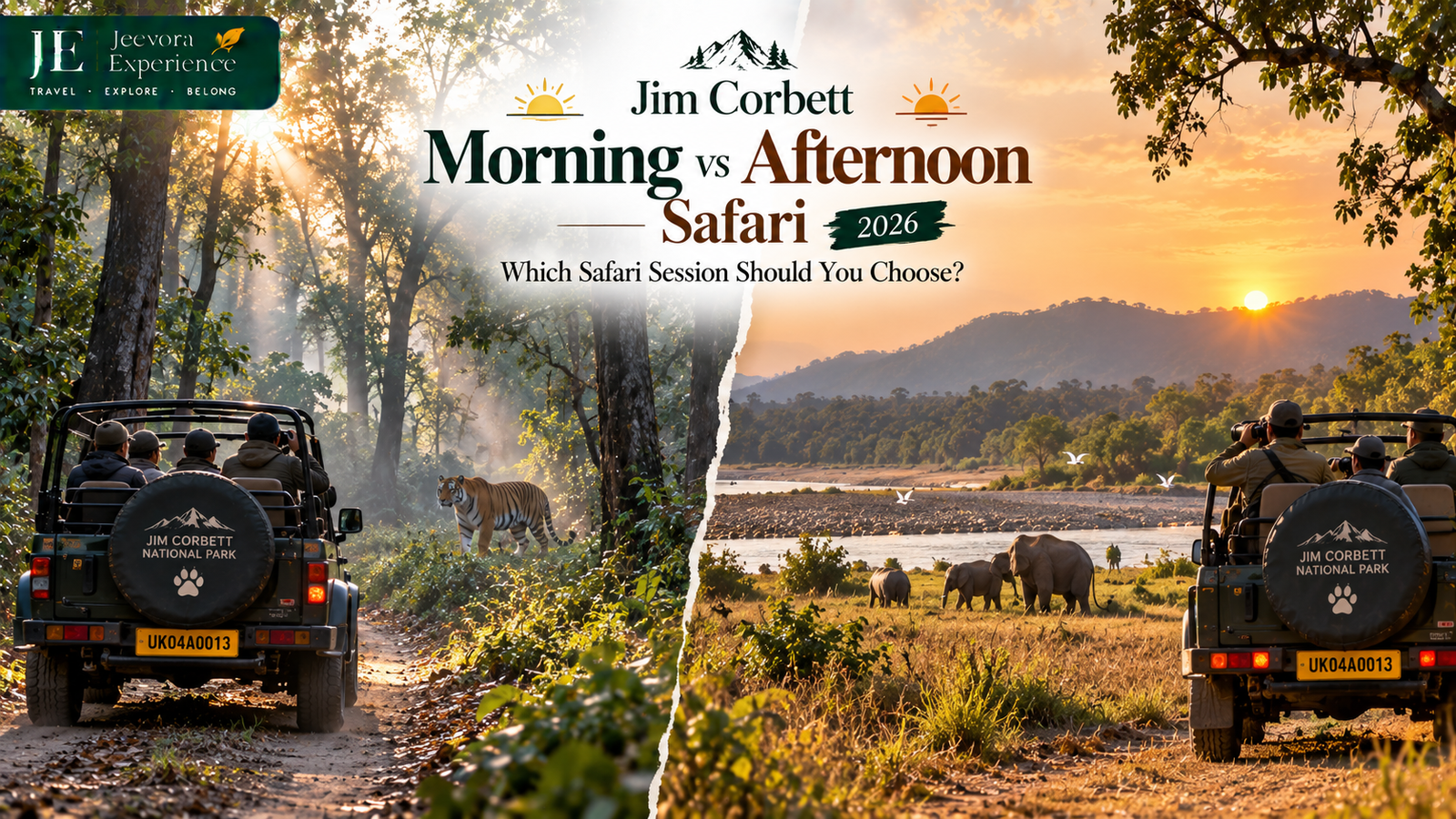
Morning Safari or Evening Safari: Which One Should You Choose?
Morning Safari
Morning safaris begin shortly after sunrise when the forest is calm, and wildlife is often at its most active.
The cool air, soft golden light, and peaceful atmosphere make this the preferred choice for photographers and serious wildlife enthusiasts.
Best For
- Wildlife photography
- Birdwatching
- Pleasant weather
- Tiger tracking
Evening Safari
Evening safaris offer a different experience.
As temperatures begin to drop, many animals become active again before sunset.
The warm golden light filtering through the forest creates stunning photographic opportunities.
Best For
- Families
- Casual travellers
- Sunset photography
- Comfortable sightseeing
Should You Book One Safari or Multiple Safaris?
If you're travelling all the way to Jim Corbett, booking just one safari can be a missed opportunity.
Every safari is different.
Even if you travel through the same route twice, you'll likely see completely different wildlife behaviour.
Experienced visitors usually recommend booking at least two or three safaris in different zones.
This not only improves your chances of spotting wildlife but also allows you to experience the incredible diversity of Corbett's forests.
Need help choosing the right safari? Read our complete Jim Corbett Safari Booking Guide before making your reservation.
How to Increase Your Chances of Wildlife Sightings
While no guide can promise a tiger sighting, a few smart decisions can significantly improve your overall safari experience.
- Visit during April to June if wildlife sightings are your priority.
- Choose the first morning safari whenever possible.
- Book more than one safari in different zones.
- Maintain silence during the safari.
- Wear neutral-coloured clothing such as olive green, brown, or beige.
- Carry binoculars for better bird and wildlife viewing.
- Listen carefully to your naturalist and safari guide.
Remember, patience is the most important skill on any wildlife safari. Sometimes the forest rewards those who wait quietly.
The Real Magic of Jim Corbett
Most travellers arrive hoping to see a tiger.
But ask anyone who has visited Jim Corbett multiple times, and they'll tell you that the true beauty of the park lies in everything else.
It's the early morning mist drifting through ancient Sal forests.
The alarm calls of deer echoing through the jungle.
A herd of elephants silently crossing the Ramganga River.
A fish eagle soaring overhead.
The scent of the forest after sunrise.
The stillness.
The anticipation.
The feeling that something extraordinary could appear around the very next bend.
That's what makes people return to Jim Corbett again and again.
Essential Travel Tips Before Visiting Jim Corbett National Park
A well-planned trip can make the difference between an average vacation and an unforgettable wildlife experience. Whether you're visiting Jim Corbett for the first time or returning for another safari, these practical tips will help you make the most of your journey.
1. Book Your Safari in Advance
Jim Corbett is one of India's most visited national parks.
Planning a trip like this? Let our team help you build the perfect itinerary.
During weekends, long holidays, Christmas, New Year, and summer vacations, safari permits often sell out quickly.
To avoid disappointment, try to book your safari at least 30 to 45 days in advance, especially if you're planning to visit popular zones like Dhikala or Bijrani.
2. Reach the Safari Gate Early
Your safari begins much before entering the forest.
Arriving 30–45 minutes before your reporting time allows you to complete the necessary formalities without rushing.
It also gives you enough time to meet your guide, understand the safety instructions, and settle into the jeep comfortably.
3. Wear the Right Clothing
Your choice of clothing matters more than many travellers realise.
Bright colours such as red, yellow, orange, or neon shades can disturb wildlife and make you stand out in the forest.
Instead, choose earthy colours that blend naturally with the surroundings.
Recommended Colours
- Olive Green
- Brown
- Khaki
- Grey
- Beige
Comfortable shoes are also essential, especially if your itinerary includes nature walks or sightseeing around Ramnagar.
4. Carry the Essentials
Before leaving for your safari, make sure you have:
- Valid government ID proof
- Camera with extra batteries
- Binoculars
- Sunglasses
- Sunscreen
- Hat or cap
- Light jacket (during winter)
- Water bottle
- Power bank
- Personal medicines
A small backpack is usually enough to carry everything comfortably.
5. Respect the Forest
Jim Corbett is a protected ecosystem, not a theme park.
Always remember that you are entering the home of wild animals.
Please follow these simple guidelines:
- Never litter inside the forest.
- Avoid loud conversations or music.
- Do not feed any wildlife.
- Stay seated inside the safari vehicle.
- Follow the instructions of your guide and driver at all times.
Responsible tourism helps preserve this incredible landscape for future generations.
Still searching for accommodation? Browse our handpicked Luxury Resorts in Jim Corbett near the major safari gates.
Common Mistakes First-Time Visitors Should Avoid
Many travellers unknowingly make small planning mistakes that affect their overall experience.
Avoiding these can make your trip much smoother.
Expecting a Guaranteed Tiger Sighting
The Royal Bengal Tiger is one of the most elusive predators in the world.
Even experienced wildlife photographers sometimes spend several safaris without seeing one.
Instead of focusing only on the tiger, enjoy the complete forest experience—from elephants and deer to birds, reptiles, and the peaceful beauty of nature.
Booking Only One Safari
Every safari offers a different experience.
Wildlife movements change every day, and each safari zone has its own character.
If your schedule allows, booking two or three safaris across different zones significantly enhances your overall experience.
Choosing a Resort Based Only on Price
A cheaper resort located far from your safari gate may increase travel time and reduce your comfort, especially for early morning safaris.
Choose accommodation based on location, guest reviews, cleanliness, and accessibility—not just the room tariff.
Visiting During Peak Holidays Without Reservations
Festive seasons and long weekends attract thousands of visitors.
If you're planning to visit during Christmas, New Year, or school holidays, book your accommodation and safari permits well in advance.
Frequently Asked Questions
Which is the best month to visit Jim Corbett National Park?
For comfortable weather and sightseeing, November to February is considered the best time to visit Jim Corbett National Park. If your priority is wildlife photography and increasing your chances of spotting a Royal Bengal Tiger, April to June is often preferred.
Is Jim Corbett National Park open throughout the year?
Yes, Jim Corbett National Park remains open throughout the year. However, not all safari zones operate in every season. Some zones temporarily close during the monsoon for conservation and maintenance, while others remain open subject to Forest Department regulations.
Which safari zone is best for first-time visitors?
Bijrani and Dhikala are among the most popular safari zones for first-time visitors because of their diverse landscapes and excellent wildlife viewing opportunities. The ideal zone also depends on the season, availability, and your travel preferences.
How many safaris should I book?
If possible, book at least two safaris in different zones. Multiple safaris give you a better opportunity to experience the park's biodiversity and improve your chances of memorable wildlife sightings.
How many days are enough for a Jim Corbett trip?
A 2 Nights / 3 Days itinerary is ideal for most travellers. It provides enough time for multiple jeep safaris, local sightseeing, relaxation, and a comfortable stay at your resort.
Can I visit Jim Corbett with children?
Absolutely. Jim Corbett is a family-friendly destination. During the winter months, pleasant weather makes it especially comfortable for families travelling with children and senior citizens.
Final Verdict
Jim Corbett National Park isn't a destination that offers the same experience throughout the year.
It changes with every season, every sunrise, and every safari.
If you're looking for cool weather, scenic landscapes, and a relaxing holiday, plan your visit between November and February.
If spotting a Royal Bengal Tiger is your dream, April to June offers some of the best wildlife viewing opportunities.
If you want to experience lush green forests, peaceful surroundings, and attractive resort deals, the monsoon season presents a completely different side of Jim Corbett.
No matter when you visit, the true beauty of Jim Corbett lies in slowing down, observing nature, and appreciating every moment the forest offers.
If you're planning to explore beyond Corbett, don't miss our Mussoorie Tour Packages, Ranikhet Tour Packages, Kausani Tour Packages, Mukteshwar Tour Packages, and Munsyari Tour Packages to experience the very best of Uttarakhand.
Explore Jim Corbett with Jeevora Experience
Planning a wildlife holiday should be exciting—not stressful.
At Jeevora Experience, we help travellers create personalised journeys that combine adventure, comfort, and authentic local experiences.
Whether you're looking for:
- Jeep Safari Bookings
- Family Holiday Packages
- Couple Getaways
- Luxury Jungle Resorts
- Corporate Retreats
- Uttarakhand Tour Packages
Our local travel experts are here to help you plan every detail of your journey with confidence.
Explore our Jim Corbett Tour Packages, book your Jeep Safari, discover premium Luxury Resorts in Jim Corbett, or Contact Us to create your personalised Uttarakhand itinerary.
Let Jeevora Experience turn your Jim Corbett holiday into an unforgettable adventure.

Comments