
Kingfishers
Kingfishers are among the most enjoyable birds to spot around Corbett's rivers and streams. Their bright colours make them particularly attractive to photographers, although they can disappear quickly if disturbed.
Look carefully near water and low branches, especially when the forest is quiet.
Eagles and Other Birds of Prey
The skies above Corbett are an important part of the wildlife experience. Raptors can often be seen scanning the landscape from high branches or soaring above the forest.
For photographers, watching the open sky is worthwhile when travelling through forest clearings and river valleys.
Hornbills
Hornbills are among the birds that make a Corbett birdwatching experience especially memorable. Their distinctive shape and large bills make them relatively easy to recognise once you know what you're looking for.
Their presence also adds to the sense that you're experiencing a functioning forest ecosystem rather than simply visiting a wildlife attraction.
Woodpeckers
Listen before you look. The tapping sound of a woodpecker working on a tree can sometimes reveal its location before you actually see the bird.
The forest canopy and mature trees provide an excellent setting for observing woodland species such as woodpeckers.
Water Birds
The Ramganga and Kosi river systems, along with smaller streams and water bodies, create opportunities to observe birds associated with aquatic habitats.
Winter can also bring migratory birds to parts of the wider region. Uttarakhand Tourism specifically highlights native and migratory birdwatching opportunities around Ramnagar and the Kosi River landscape. Travellers can also explore the Ramnagar travel guide when planning their stay.
Sitabani Forest
Sitabani is one of the better-known birdwatching areas around Corbett. Uttarakhand Tourism describes it as a popular bird-watching destination that can be explored through a jungle safari.
The quieter atmosphere makes it a useful choice for travellers who want to spend more time observing birds rather than focusing only on large mammals. Jeevora Experience recommends exploring the Sitabani Forest guide before planning this part of your Corbett experience.
Kosi River
River landscapes are excellent places to slow down. Birds often gather around water, while the open surroundings can make spotting flying species easier.
Jeevora Experience suggests carrying binoculars even if you're visiting primarily for a wildlife safari. A pair of lightweight binoculars can transform an ordinary stop into a rewarding birdwatching session.
Dhikuli and Ramnagar Surroundings
The areas around Ramnagar also offer birdwatching opportunities. Uttarakhand Tourism specifically mentions Dhikuli village and locations around the Kosi River as tranquil places for observing native and migratory birds.
For travellers staying in the region, these locations can complement a formal Corbett safari. Those interested in planning their wildlife experience can refer to the Jim Corbett safari zones guide.
Forest Clearings and Grasslands
Don't focus only on dense forest. Open grasslands, forest edges and clearings can be excellent for observing birds in flight or species feeding close to the ground.
This is one reason a well-planned Jim Corbett safari can be so rewarding. Every landscape offers something different. You can also explore a Corbett safari experience when planning your wildlife holiday.
Winter
Winter is particularly interesting for bird enthusiasts because migratory birds add another dimension to the region's birdlife. Cooler mornings are also comfortable for longer outdoor sessions.
Spring
Spring brings increased activity to the forest. Bird calls become a noticeable part of the morning atmosphere, and fresh vegetation adds colour to the landscape.
Summer
Summer mornings can be excellent for wildlife and birdwatching before temperatures rise. Start early, carry sufficient water and avoid spending long periods exposed to the midday heat.
For broader seasonal planning, Jeevora Experience's travel blog can help you build a complete Corbett itinerary around wildlife, nature and local experiences.
Carry Binoculars
A bird may be sitting high in the canopy or across a river, where the naked eye isn't enough. Compact binoculars are one of the most useful things you can carry.
Listen to the Forest
Birdwatching isn't only visual. Learn to notice different calls, wing movements and changes in the soundscape.
Travel Slowly
Ask your naturalist to stop when conditions are suitable. Rushing from one location to another can mean missing smaller species.
Avoid Loud Conversations
Birds are sensitive to disturbance. Keeping voices low improves your own chances of seeing them and makes the experience better for everyone.
Carry a Field Guide
A simple bird guide or reliable identification app can help beginners understand what they've seen. However, don't spend the entire safari looking at a screen. Watch first and identify later.
For a complete wildlife experience, you can also explore safari experiences with Jeevora Experience.
How many bird species are found in Jim Corbett?
Uttarakhand Tourism states that the Corbett region supports more than 650 species of domestic and migratory birds.
What is the best time for birdwatching in Jim Corbett?
Winter is particularly interesting for birdwatchers because migratory birds can add to the resident birdlife. Spring and early summer mornings are also rewarding for forest activity.
Is Sitabani good for birdwatching?
Yes. Uttarakhand Tourism identifies Sitabani Forest as a well-known bird-watching destination around the Corbett region. You can learn more through the Sitabani Forest guide.
Can beginners enjoy birdwatching in Corbett?
Absolutely. You don't need advanced knowledge. Binoculars, patience and a knowledgeable naturalist can make the experience enjoyable even for first-time birdwatchers.
Can I photograph birds during a Corbett safari?
Yes, provided photography follows safari and forest rules. A telephoto lens, patience and an understanding of animal behaviour will generally produce better results than trying to approach birds closely.
SEO Title
Birds of Jim Corbett: Best Birds, Birdwatching Spots & Tips
Planning a trip like this? Let our team help you build the perfect itinerary.
URL Slug
birds-of-jim-corbett
Meta Title
Birds of Jim Corbett | Birdwatching Guide & Best Spots
Meta Description
Discover the Birds of Jim Corbett, popular birdwatching spots, best seasons, photography tips, safari advice and practical guidance for bird lovers and nature travellers.
Primary Keyword
Birds of Jim Corbett
Secondary Keywords
- Jim Corbett birds
- birdwatching in Jim Corbett
- birds in Corbett National Park
- bird species in Jim Corbett
- best birds to see in Corbett
- bird photography Jim Corbett
- Sitabani birdwatching
- Corbett birdwatching spots
- migratory birds in Jim Corbett
- wildlife photography Corbett
Short Description
Discover the Birds of Jim Corbett with this practical guide to birdwatching spots, seasonal sightings, photography tips, safari experiences and responsible birdwatching.
Excerpt
Jim Corbett is more than a tiger destination. Its rivers, forests and grasslands support an impressive variety of resident and migratory birds. Explore the best birdwatching locations, seasons, photography tips and practical advice for experiencing Corbett's birdlife.
Image Alt Text
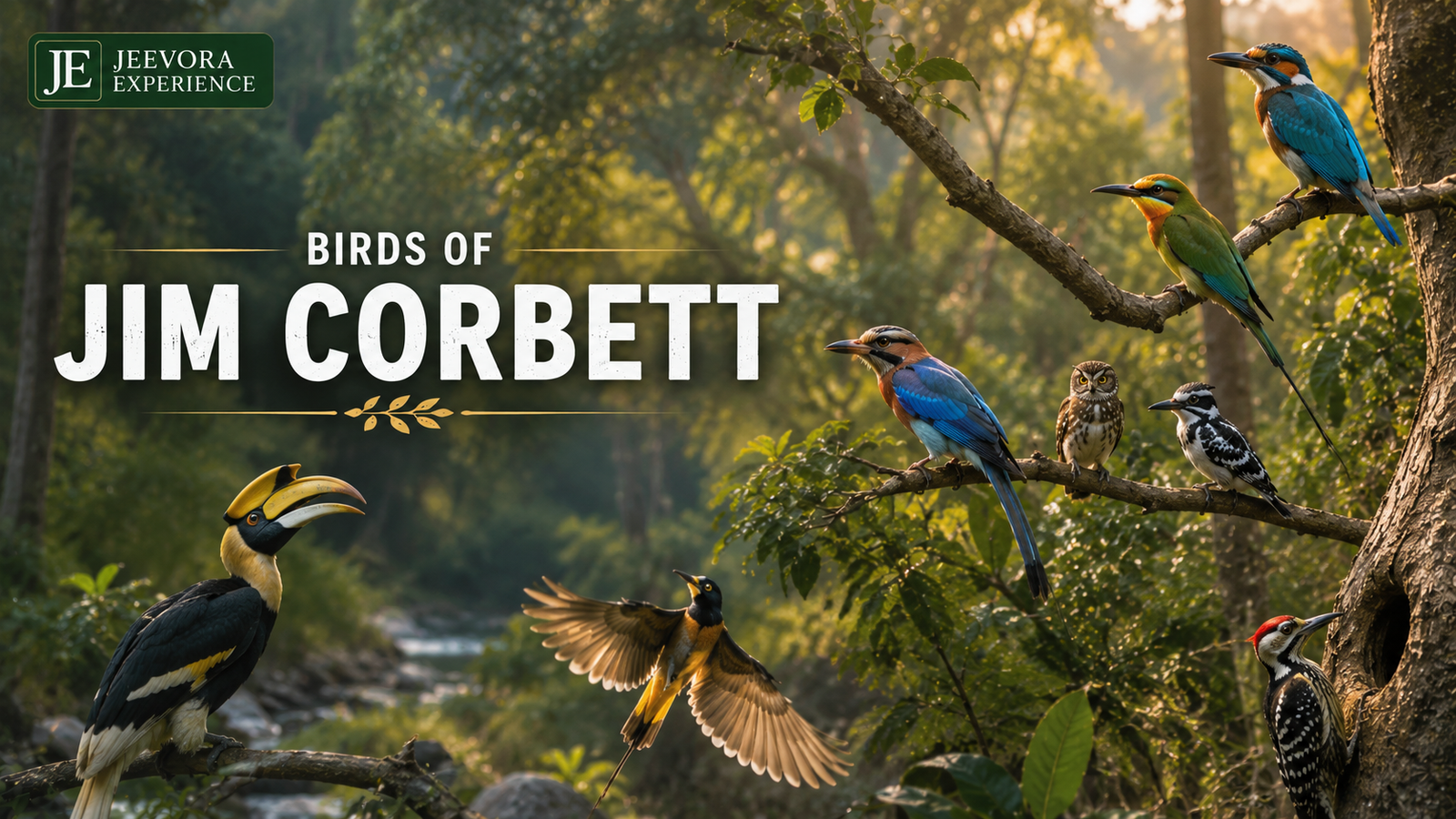
Colourful bird perched in the forest of Jim Corbett National Park during a birdwatching safari
Featured Image Suggestion
An ultra-realistic premium wildlife photograph of a colourful Indian forest bird perched naturally on a branch in Jim Corbett National Park, dense sal forest in the background, soft early-morning golden light filtering through trees, subtle atmospheric haze, natural wildlife setting, refined luxury travel magazine aesthetic, cinematic depth, highly detailed feathers, no people, no text, no logos, 16:9 composition suitable for a premium Jeevora Experience blog cover.



Comments