
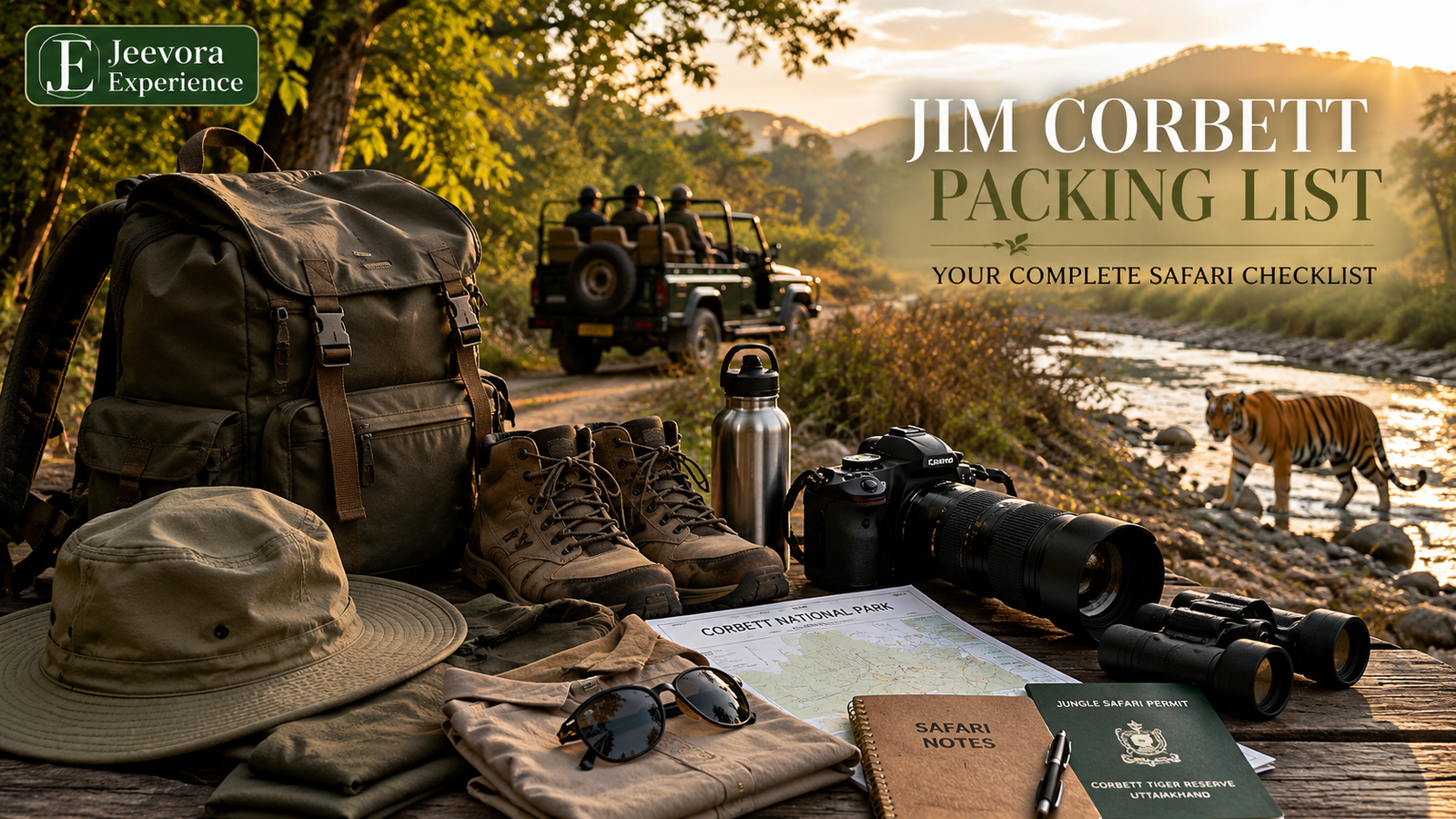
Jim Corbett Packing List
Planning a safari in India's oldest national park is exciting, but packing wisely can make your journey much more comfortable. A well-prepared Jim Corbett Packing List ensures you're ready for changing weather, long safari drives, nature walks, and peaceful evenings surrounded by the forest. Whether you're travelling with family, your partner, or a group of friends, carrying the right essentials helps you focus on enjoying the wilderness instead of worrying about forgotten items.
Imagine setting out before sunrise as the cool forest air fills the open safari vehicle, birds begin their morning calls, and golden light filters through the towering sal trees. In moments like these, something as simple as a light jacket, comfortable walking shoes, or a pair of binoculars can make a remarkable difference to your overall experience.
At Jeevora Experience, we've helped countless travellers plan unforgettable wildlife holidays around Jim Corbett National Park. One of the most common questions our travel experts receive is, "What should I pack for Jim Corbett?" The answer depends on the season, your itinerary, and your travel style, but there are certain essentials every visitor should carry.
This comprehensive Jim Corbett Packing List has been created to help families, couples, solo travellers, wildlife photographers, and nature enthusiasts prepare confidently for their trip. From clothing and travel documents to photography equipment, medicines, and seasonal essentials, you'll find everything you need in one practical guide.
Whether you're planning your first jungle safari or returning for another wildlife adventure, packing smart helps you travel lighter, stay comfortable, and enjoy every moment without unnecessary stress. The travel specialists at Official Jeevora Experience Website recommend preparing your luggage at least a day before departure so you have enough time to double-check important items before leaving.
By the end of this guide, you'll know exactly what to carry, what to leave behind, and how to prepare for a safe, comfortable, and memorable safari experience in one of India's most celebrated wildlife destinations. If you're still planning your itinerary, you can also explore our travel blogs for expert guides on safaris, nearby attractions, accommodations, and everything you need for the perfect Jim Corbett holiday.
Why You Need a Jim Corbett Packing List
Packing for Jim Corbett National Park is quite different from preparing for a regular holiday. Safari drives begin early in the morning or late in the afternoon, weather conditions can change throughout the day, and you'll spend several hours outdoors. A well-planned Jim Corbett Packing List helps you stay comfortable, organized, and fully prepared for every part of your adventure.
Whether you're travelling with family, friends, or as a solo explorer, carrying the right essentials means you can focus on spotting wildlife, enjoying scenic landscapes, and creating unforgettable memories instead of searching for forgotten items after reaching your destination.
According to Jeevora Experience, many first-time visitors either overpack unnecessary items or forget simple essentials like binoculars, sunscreen, or a light jacket. Planning your luggage in advance not only saves space but also makes moving between your resort, safari gates, and nearby attractions much easier.
Benefits of Packing Smart
- Stay comfortable during long Jeep and Canter safari drives.
- Be prepared for changing weather conditions.
- Protect yourself from dust, insects, and sunlight.
- Keep important documents organised and easily accessible.
- Carry the right gear for wildlife photography.
- Avoid unnecessary shopping after reaching Jim Corbett.
- Travel lighter without compromising on essential items.
If you're still planning your wildlife holiday, don't forget to explore our complete How to Reach Jim Corbett National Park guide before finalising your travel plans.
Weather & Safari Conditions Throughout the Year
Understanding the weather is one of the most important parts of preparing your Jim Corbett Packing List. Every season offers a different safari experience, and packing accordingly ensures maximum comfort throughout your journey.
Summer (March to June)
Summer temperatures generally range between 25°C and 40°C. While afternoons can become quite warm, early morning safari drives remain pleasant with cool forest breezes.
Recommended summer essentials include:
- Lightweight cotton clothing.
- Breathable full-sleeve shirts.
- Wide-brim hat or cap.
- Sunglasses with UV protection.
- High-SPF sunscreen.
- Reusable water bottle.
- Lip balm and moisturiser.
Earth-toned colours such as olive green, khaki, beige, and brown blend naturally with the forest surroundings and are ideal for wildlife safaris.
Monsoon (July to September)
Although several core safari zones remain closed during the monsoon, buffer zones and nearby destinations may still be accessible depending on weather conditions. Rain showers can arrive suddenly, making waterproof gear an essential part of your luggage.
Carry the following during the rainy season:
- Waterproof jacket.
- Compact umbrella.
- Waterproof backpack cover.
- Quick-dry clothing.
- Anti-slip footwear.
- Extra socks.
- Waterproof pouch for electronics.
Travel experts at Explore Uttarakhand with Jeevora Experience recommend storing important documents and electronic devices in waterproof zip-lock pouches during monsoon travel.
Winter (October to February)
Winter is considered one of the best times to visit Jim Corbett. Early morning safari temperatures can occasionally drop below 5°C, especially during December and January. Since Jeep Safaris operate in open vehicles, warm clothing becomes essential.
Your winter packing list should include:
- Warm fleece jacket.
- Windproof outer layer.
- Thermal innerwear.
- Woollen cap.
- Gloves.
- Neck warmer or muffler.
- Warm socks.
Layering your clothing is the best approach because temperatures rise gradually after sunrise. This allows you to stay warm during chilly safari drives while remaining comfortable later in the day.
If you're planning your visit based on weather and wildlife activity, our detailed guide on the Best Time to Visit Jim Corbett National Park can help you choose the ideal season for your trip.
Essential Travel Documents
One of the easiest ways to interrupt an otherwise perfect wildlife holiday is forgetting important travel documents. Since forest authorities verify visitor details before allowing entry into safari zones, carrying valid identification and booking confirmations is essential. Keeping all your documents organised in a waterproof travel folder or document pouch will save time during hotel check-ins and safari entry.
The travel experts at Jeevora Experience recommend keeping both printed and digital copies of important documents, as mobile network connectivity may occasionally be limited in certain areas around the national park.
Government-Issued Photo ID
Every adult visitor must carry an original government-issued photo identification document. The details on your ID should match the information provided during your safari booking.
Accepted identity proofs include:
- Aadhaar Card
- Passport
- Driving Licence
- Voter ID Card
International travellers should carry their original passport along with valid visa documentation wherever applicable.
Safari Booking Confirmation
Your safari booking confirmation is one of the most important documents you'll need. Forest officials verify booking details before allowing entry into the designated safari zone.
Carry both:
- A printed safari permit or booking confirmation.
- A digital copy stored on your mobile phone.
If you haven't booked your safari yet, our detailed Jim Corbett Safari Permit Guide explains the booking process, permit requirements, and useful planning tips.
Hotel & Travel Confirmations
Keep copies of your accommodation and transportation bookings easily accessible throughout your journey. This makes hotel check-ins faster and helps avoid unnecessary delays during travel.
Useful confirmations include:
- Hotel or resort booking confirmation.
- Train, flight, or bus tickets.
- Taxi or airport transfer details.
- Travel itinerary.
Travellers planning an extended wildlife holiday may also find our 2 Days Jim Corbett Itinerary helpful for organising accommodation, sightseeing, and safari schedules.
Emergency Information
It's always wise to carry a small emergency information card inside your wallet or backpack. While emergencies are uncommon, having important details readily available provides extra peace of mind.
Your emergency card should include:
- Emergency family contact number.
- Hotel or resort contact details.
- Local travel coordinator's contact.
- Blood group (optional).
- Medical conditions or allergies, if applicable.
Payment Options
Although digital payments are widely accepted around Ramnagar and many nearby resorts, carrying a small amount of cash is still recommended for local purchases, tips, parking charges, or situations where internet connectivity may be limited.
Before leaving home, double-check your documents, charge your phone, and keep backups of important confirmations. A few minutes of preparation can save valuable time during your trip and allow you to focus on what truly matters—experiencing the incredible wildlife and natural beauty of Jim Corbett National Park.
Clothing Essentials
Choosing the right clothing is one of the most important parts of your Jim Corbett Packing List. During a typical day, you may experience cool early mornings, warm afternoons, and pleasant evenings. Wearing comfortable, practical clothing helps you enjoy every safari without feeling too hot, too cold, or restricted.
According to Jeevora Experience, lightweight, breathable clothing in natural colours is always the best choice for exploring the forests of Jim Corbett National Park.
Choose Earth-Toned Colours
Neutral shades blend naturally with the forest environment and are considered more suitable for wildlife safaris. Bright colours can attract unnecessary attention and may disturb wildlife.
Recommended colours include:
- Olive Green
- Khaki
- Beige
- Brown
- Grey
Avoid bright shades such as red, yellow, orange, neon green, or fluorescent colours during safari drives.
Prefer Full-Sleeve Clothing
Lightweight full-sleeve shirts and full-length trousers provide excellent protection from sunlight, dust, insects, and occasional tree branches along forest trails. They also keep you comfortable during chilly morning safaris without feeling heavy.
Pack a combination of:
- Breathable cotton shirts.
- Quick-dry full-sleeve T-shirts.
- Comfortable trekking trousers.
- Lightweight cargo pants.
Carry Layered Clothing
Weather conditions can change quickly between sunrise and afternoon. Layering allows you to adjust your clothing without carrying bulky winter wear throughout the day.
Recommended layering includes:
- Light cotton base layer.
- Fleece or lightweight sweatshirt.
- Windproof jacket during winter.
If you're visiting during the cooler months, our Best Time to Visit Jim Corbett National Park guide explains what weather to expect throughout the year.
Comfortable Evening Wear
After returning from the safari, most travellers relax at their resort or visit nearby cafés and local markets. Pack a few comfortable casual outfits for evenings while keeping your luggage practical and lightweight.
Footwear & Outdoor Accessories
Although most wildlife safaris take place inside authorised vehicles, you'll still spend time walking around resorts, nature trails, viewpoints, and nearby attractions. Comfortable footwear and practical outdoor accessories make your journey much more enjoyable.
Comfortable Walking Shoes
A good pair of lightweight sports shoes or trekking shoes is ideal for exploring Jim Corbett. They provide excellent grip, comfort, and stability on uneven surfaces while remaining comfortable throughout the day.
Look for footwear that offers:
- Good ankle support.
- Breathable material.
- Slip-resistant soles.
- Comfortable cushioning.
Avoid wearing brand-new shoes during your trip, as they may cause discomfort or blisters after long walks.
Sandals for Resort Use
After a long safari, lightweight sandals or slippers are perfect for relaxing around your resort. They are easy to pack and convenient for short walks within the property.
Must-Have Outdoor Accessories
A few carefully chosen accessories can significantly improve your safari experience.
- Wide-brim hat or safari cap.
- UV-protection sunglasses.
- Lightweight scarf or neck gaiter.
- Reusable water bottle.
- Compact day backpack.
- Rain cover during monsoon.
- Binoculars for wildlife and birdwatching.
Binoculars are especially useful for spotting birds, deer, elephants, and other wildlife from a safe distance. Even if you aren't a wildlife photographer, they allow you to appreciate details that may not be visible to the naked eye.
The local travel experts at Travel with Jeevora Experience recommend carrying a lightweight backpack with only your daily essentials instead of a large travel bag during safari excursions. This keeps you comfortable while leaving enough space for your camera, water bottle, and other important items.
If you're planning to spend additional time exploring nearby destinations after your safari, don't miss our guide to the Top 10 Places to Visit in Uttarakhand for more travel inspiration.
Safari Gear & Photography Essentials
A safari in Jim Corbett National Park is filled with unpredictable wildlife encounters. A tiger crossing the trail, a herd of elephants near the river, or a rare bird perched high in the trees can appear without warning. Carrying the right safari gear ensures you're always prepared to enjoy—and capture—these unforgettable moments.
According to Jeevora Experience, packing only practical equipment makes your safari more comfortable while allowing you to react quickly whenever wildlife appears.
Photography Equipment
If wildlife photography is one of the highlights of your trip, consider carrying the following essentials:
- DSLR or Mirrorless Camera.
- Telephoto Lens (200–600mm).
- Wide-angle Lens for landscapes.
- Extra Memory Cards.
- Fully Charged Spare Batteries.
- Lens Cleaning Kit.
- Microfiber Cleaning Cloth.
- Camera Rain Cover (Monsoon).
- Comfortable Camera Backpack.
Morning safaris usually offer soft natural light and increased wildlife activity, making them especially rewarding for photographers. If photography is your priority, our Best Time for Tiger Sighting in Jim Corbett guide can help you plan your visit more effectively.
Essential Safari Gear
Along with your camera equipment, these items can make your safari more enjoyable:
- Binoculars for wildlife viewing.
- Lightweight day backpack.
- Travel journal or notebook.
- Reusable water bottle.
- Small flashlight.
- Dust-proof storage pouch.
- Zip-lock bags for valuables.
Travelling with only the essentials keeps your vehicle organised and allows you to enjoy the safari without carrying unnecessary weight.
Health, Medicines & Personal Care Items
Although Jim Corbett has nearby medical facilities, carrying a small health kit is always a wise decision. Whether you're travelling with children, senior citizens, or on your own, having essential medicines readily available provides extra peace of mind throughout the journey.
Prescription Medicines
If you're taking regular medication, pack enough for your entire trip along with a copy of your prescription whenever necessary. Store medicines in their original packaging and keep them easily accessible rather than inside checked luggage.
Basic First-Aid Kit
Your first-aid kit should include:
- Pain relief tablets.
- Band-aids.
- Antiseptic cream.
- Cotton and gauze.
- ORS sachets.
- Motion sickness tablets (if required).
- Digestive medicine.
Personal Care Essentials
These everyday items help you stay comfortable throughout your safari holiday:
- Sunscreen (SPF 30 or above).
- Insect repellent.
- Hand sanitiser.
- Wet wipes.
- Tissues.
- Lip balm.
- Moisturiser.
- Toothbrush and toothpaste.
- Deodorant.
Hydration is equally important, particularly during warmer months. The travel experts at Jeevora Experience recommend carrying a reusable water bottle and drinking water regularly throughout the day, especially before and after safari drives.
Electronics & Travel Essentials
Modern travel becomes far more convenient when you pack a few essential electronic accessories. Whether you're navigating routes, capturing wildlife photographs, or staying connected with family, these items ensure a hassle-free experience.
Essential Electronics
- Smartphone.
- Mobile Charger.
- High-capacity Power Bank.
- Camera Charger.
- Charging Cables.
- Universal Travel Adapter (International Travellers).
- Smartwatch Charger (if applicable).
A fully charged power bank is especially useful during long safari drives, as continuous photography, GPS navigation, and mobile usage can quickly reduce battery life.
Useful Travel Accessories
Small accessories often become surprisingly useful during a wildlife holiday.
- Waterproof document pouch.
- Zip-lock storage bags.
- Travel organiser.
- Luggage tags.
- Small luggage lock.
- Reusable shopping bag.
- Pen and notepad.
Keeping chargers, cables, and electronic accessories inside a separate organiser prevents tangles and makes it much easier to locate important items whenever you need them.
If you're planning an extended holiday around Ramnagar, consider exploring our Top Places to Visit Near Jim Corbett National Park guide to discover additional attractions you can include in your itinerary.
With the right combination of safari gear, healthcare essentials, and travel accessories, you'll be fully prepared to enjoy every moment of your Jim Corbett adventure while travelling comfortably and responsibly.
Seasonal Packing Guide
One of the smartest ways to prepare for a wildlife holiday is to pack according to the season. The climate in Jim Corbett National Park changes considerably throughout the year, and carrying season-appropriate clothing and accessories ensures you stay comfortable during every safari.
The travel experts at Jeevora Experience recommend checking the weather forecast a few days before departure and making small adjustments to your luggage rather than carrying unnecessary items.
Summer Packing (March to June)
Summer temperatures generally range between 25°C and 40°C. While afternoons can become quite warm, morning safari drives usually remain pleasant. Lightweight, breathable clothing is the key to staying comfortable.
Recommended summer essentials:
- Lightweight cotton T-shirts.
- Breathable full-sleeve shirts.
- Quick-dry trousers.
- Wide-brim hat or safari cap.
- UV-protection sunglasses.
- High-SPF sunscreen.
- Lip balm.
- Reusable water bottle.
- Light scarf or neck gaiter.
Earth-toned colours such as olive green, khaki, beige, and brown remain the preferred choice throughout the year, especially during safari drives.
Monsoon Packing (July to September)
Although several core safari zones remain closed during the monsoon, travellers visiting buffer zones or nearby destinations should be prepared for sudden rainfall and high humidity.
Monsoon essentials include:
- Waterproof rain jacket.
- Compact umbrella.
- Waterproof backpack cover.
- Quick-dry clothing.
- Anti-slip footwear.
- Extra socks.
- Waterproof document pouch.
- Dry bags for cameras and electronics.
Protecting your electronic devices and important travel documents from moisture should be a top priority during the rainy season.
Winter Packing (October to February)
Winter is considered one of the best seasons for wildlife safaris. However, temperatures during early morning Jeep Safaris can occasionally fall below 5°C, particularly in December and January.
Winter packing checklist:
- Warm fleece jacket.
- Thermal innerwear.
- Windproof outer jacket.
- Woollen cap.
- Gloves.
- Neck warmer or muffler.
- Warm socks.
- Moisturiser and lip balm.
Layering your clothing is always recommended because mornings can be extremely cold while afternoons often become pleasantly warm. If you're planning your safari based on weather conditions, our Best Time to Visit Jim Corbett National Park guide offers detailed seasonal insights.
What Not to Pack
Packing efficiently is just as important as carrying the right essentials. Avoiding unnecessary items helps keep your luggage lightweight, organised, and easier to manage throughout your trip. Since most safari vehicles have limited storage space, travelling with only practical necessities makes your overall experience much more comfortable.
Avoid Bright-Coloured Clothing
Bright shades like red, yellow, orange, fluorescent green, and neon colours stand out against the natural forest environment and are generally discouraged during wildlife safaris. Neutral colours help you blend into the surroundings and create a more peaceful wildlife experience.
Leave Heavy Luggage Behind
Large suitcases and unnecessary clothing only make travelling between hotels, safari gates, and nearby attractions more difficult. Instead, choose versatile clothing that can be mixed and matched throughout your trip.
Don't Carry Strong Fragrances
Strong perfumes, heavily scented deodorants, and fragrant lotions can interfere with the natural forest environment. It's better to use mild personal care products while exploring wildlife areas.
Items You Should Avoid Packing
- Bright-coloured clothing.
- Expensive jewellery.
- Heavy suitcases.
- Loud Bluetooth speakers.
- Disposable plastic items.
- Large food containers.
- High heels or uncomfortable footwear.
- Unnecessary electronic gadgets.
- Drones (unless officially permitted).
- Excess cash and valuables.
Responsible travellers also avoid littering and minimise the use of single-use plastics while visiting protected forest areas. Carrying a reusable water bottle and shopping bag is a small step that contributes to responsible tourism.
According to the local experts at Jeevora Experience, packing light not only makes your journey easier but also allows you to focus on the true purpose of your visit—experiencing the incredible wildlife, peaceful forests, and unforgettable natural beauty of Jim Corbett National Park without unnecessary distractions.
Family Packing Checklist
Travelling to Jim Corbett National Park with your family is a wonderful experience, but good preparation makes the journey even more enjoyable. Whether you're travelling with young children, teenagers, or senior family members, having a well-organised packing checklist ensures everyone stays comfortable throughout the trip.
According to the travel specialists at Jeevora Experience, families often carry too many unnecessary items while forgetting simple essentials like medicines, extra clothing, or reusable water bottles. Packing smart keeps your luggage manageable without compromising on comfort.
Essential Documents
- Government-issued photo ID for all adults.
- Safari booking confirmation.
- Hotel or resort booking confirmation.
- Travel tickets.
- Emergency contact details.
- Cash and digital payment options.
Clothing Essentials
- Comfortable full-sleeve shirts.
- Full-length trousers.
- Extra change of clothes.
- Light jacket or fleece.
- Comfortable sleepwear.
- Hat or cap.
- Socks and undergarments.
Health & Personal Care
- Prescription medicines.
- Basic first-aid kit.
- Hand sanitiser.
- Sunscreen.
- Insect repellent.
- Wet wipes and tissues.
- Reusable water bottles.
For Children
- Healthy snacks.
- Favourite toy or activity book.
- Extra clothing.
- Baby wipes.
- Diapers (if required).
- Baby medicines.
- Small blanket during winter.
Electronics
- Mobile phones.
- Phone chargers.
- Camera.
- Power bank.
- Charging cables.
- Extra batteries and memory cards.
Preparing this checklist a day before departure gives you enough time to verify that nothing important has been left behind.
Packing Tips for Couples, Solo Travellers & Photographers
Every traveller explores Jim Corbett differently. While families often prioritise convenience, couples usually prefer travelling light, photographers carry specialised equipment, and solo travellers focus on flexibility and safety. Adjusting your packing list according to your travel style helps create a smoother and more enjoyable experience.
Packing Tips for Couples
Couples generally benefit from carrying lightweight luggage while keeping enough essentials for a comfortable wildlife getaway.
Planning a trip like this? Let our team help you build the perfect itinerary.
- Choose matching earth-toned safari clothing.
- Carry one compact day backpack.
- Pack a camera for memorable photographs.
- Bring binoculars for wildlife viewing.
- Carry comfortable walking shoes.
- Pack light evening wear for your resort stay.
If you're planning a romantic wildlife escape, the travel experts at Plan Your Trip with Jeevora Experience recommend booking an early morning Jeep Safari for peaceful forest landscapes and excellent wildlife viewing opportunities.
Packing Tips for Solo Travellers
Solo travellers should focus on lightweight luggage, safety, and convenience. Packing only the essentials makes moving between resorts, safari gates, and nearby attractions much easier.
- Lightweight backpack.
- Personal identification documents.
- Emergency contact information.
- Portable power bank.
- Reusable water bottle.
- Flashlight.
- Offline maps.
- Basic first-aid kit.
Travelling light allows solo visitors to enjoy greater flexibility while exploring Jim Corbett and nearby destinations across Uttarakhand.
Packing Tips for Wildlife Photographers
Jim Corbett is one of India's finest wildlife photography destinations. Preparing your camera gear properly ensures you're ready whenever a tiger, elephant, deer, or rare bird appears unexpectedly.
- DSLR or Mirrorless Camera.
- Telephoto Lens.
- Wide-angle Lens.
- Extra Batteries.
- Multiple Memory Cards.
- Lens Cleaning Kit.
- Rain Cover for Equipment.
- Comfortable Camera Backpack.
- Bean Bag (Optional).
Photographers should avoid carrying excessive equipment inside the safari vehicle. According to the local experts at Travel with Jeevora Experience, carrying only the gear you'll genuinely use allows faster camera handling and makes wildlife photography much more comfortable during long safari drives.
If you're planning to combine your safari with additional sightseeing, don't miss our guide to the Things to Do in Jim Corbett for more unforgettable experiences around the national park.
Printable Jim Corbett Packing Checklist
Before leaving for your trip, take a few minutes to go through this practical checklist. It covers the most important items every traveller should carry for a comfortable and well-organised safari. The travel experts at Jeevora Experience recommend checking off each item while packing to ensure nothing essential is left behind.
Travel Documents
- ☐ Government-issued Photo ID
- ☐ Safari Booking Confirmation
- ☐ Hotel Booking Confirmation
- ☐ Train/Flight/Bus Tickets
- ☐ Emergency Contact Details
- ☐ Cash & Payment Cards
Clothing
- ☐ Full-Sleeve Shirts
- ☐ Comfortable T-Shirts
- ☐ Trousers or Cargo Pants
- ☐ Light Jacket or Fleece
- ☐ Innerwear & Socks
- ☐ Comfortable Walking Shoes
- ☐ Sandals or Slippers
- ☐ Hat or Safari Cap
Health & Personal Care
- ☐ Personal Medicines
- ☐ First-Aid Kit
- ☐ Sunscreen
- ☐ Insect Repellent
- ☐ Hand Sanitiser
- ☐ Wet Wipes & Tissues
- ☐ Lip Balm
- ☐ Toiletries
Electronics
- ☐ Smartphone
- ☐ Phone Charger
- ☐ Power Bank
- ☐ Camera
- ☐ Camera Charger
- ☐ Memory Cards
- ☐ Extra Batteries
Safari Essentials
- ☐ Binoculars
- ☐ Water Bottle
- ☐ Small Backpack
- ☐ Sunglasses
- ☐ Flashlight
- ☐ Notebook & Pen
- ☐ Rain Jacket (Monsoon)
- ☐ Gloves & Woollens (Winter)
Once you've completed your checklist, you're ready to enjoy a smooth and hassle-free wildlife adventure. If you're still planning your itinerary, our Jim Corbett Tour Packages guide can help you choose the perfect travel experience.
Frequently Asked Questions
What clothes should I wear for a Jim Corbett safari?
Wear comfortable full-sleeve shirts, full-length trousers, and earth-toned colours such as olive green, khaki, beige, or brown. These colours blend naturally with the forest environment and are generally recommended for wildlife safaris.
Do I need warm clothes in Jim Corbett?
Yes. If you're visiting between October and February, especially during early morning Jeep Safaris, carry a warm jacket, thermals, gloves, and a woollen cap. Winter mornings can be surprisingly cold.
Should I carry binoculars for the safari?
Absolutely. Binoculars allow you to observe birds and distant wildlife more clearly without disturbing their natural behaviour. They are highly recommended for both first-time visitors and experienced wildlife enthusiasts.
Can I carry professional camera equipment?
Yes. DSLR and mirrorless cameras are allowed during safaris. Wildlife photographers should also carry extra batteries, memory cards, and a telephoto lens for the best photography experience.
Is a power bank necessary?
Yes. Safari drives, photography, navigation, and continuous mobile usage can quickly drain your phone's battery. A fully charged power bank ensures your devices remain operational throughout the day.
What should I avoid packing?
Avoid bright-coloured clothing, heavy luggage, expensive jewellery, strong perfumes, drones (without official permission), loud speakers, and unnecessary valuables. Packing light makes travelling much easier.
How many bags should I carry for a Jim Corbett trip?
For a short two- or three-day visit, one medium suitcase and one compact day backpack are usually sufficient. Keeping your luggage light allows you to move comfortably between resorts, safari gates, and nearby attractions.
Is there anything special families should pack?
Families travelling with children should carry extra snacks, water bottles, baby essentials, personal medicines, wipes, an extra set of clothes, and a small activity book or toy to keep younger children comfortable during the journey.
Final Thoughts
A well-planned Jim Corbett Packing List can make the difference between a good trip and a truly memorable wildlife adventure. Packing the right clothing, footwear, travel documents, safari gear, and personal essentials allows you to enjoy every moment without worrying about forgotten items or unexpected weather changes.
Whether you're heading out on an early morning Jeep Safari, exploring the famous Dhikala landscape, photographing majestic wildlife, or simply relaxing amidst nature, being properly prepared lets you focus entirely on the incredible experiences waiting inside Jim Corbett National Park.
Remember, smart packing isn't about carrying more—it's about carrying the right things. Lightweight luggage, comfortable clothing, organised documents, and a few carefully selected accessories will make your journey smoother from the moment you leave home until your return.
If you're still planning your trip, don't forget to explore our guides on the How to Reach Jim Corbett National Park, Best Time to Visit Jim Corbett National Park, and Things to Do in Jim Corbett to make your wildlife holiday even more rewarding.
Plan Your Jim Corbett Adventure with Jeevora Experience
At Jeevora Experience, we believe every wildlife journey should be comfortable, well-planned, and truly unforgettable. From safari bookings and luxury resorts to customised itineraries, family vacations, couple getaways, group tours, and Uttarakhand travel experiences, our local experts help you plan every detail with confidence.
Whether you're visiting Jim Corbett for the first time or returning to experience its wilderness once again, our experienced travel team can help you choose the right safari, recommend the best accommodation, and create a personalised itinerary that matches your interests and budget.
Ready to begin your next wildlife adventure? Let Jeevora Experience help you discover the very best of Jim Corbett National Park with carefully curated travel experiences designed around your needs.

Comments