
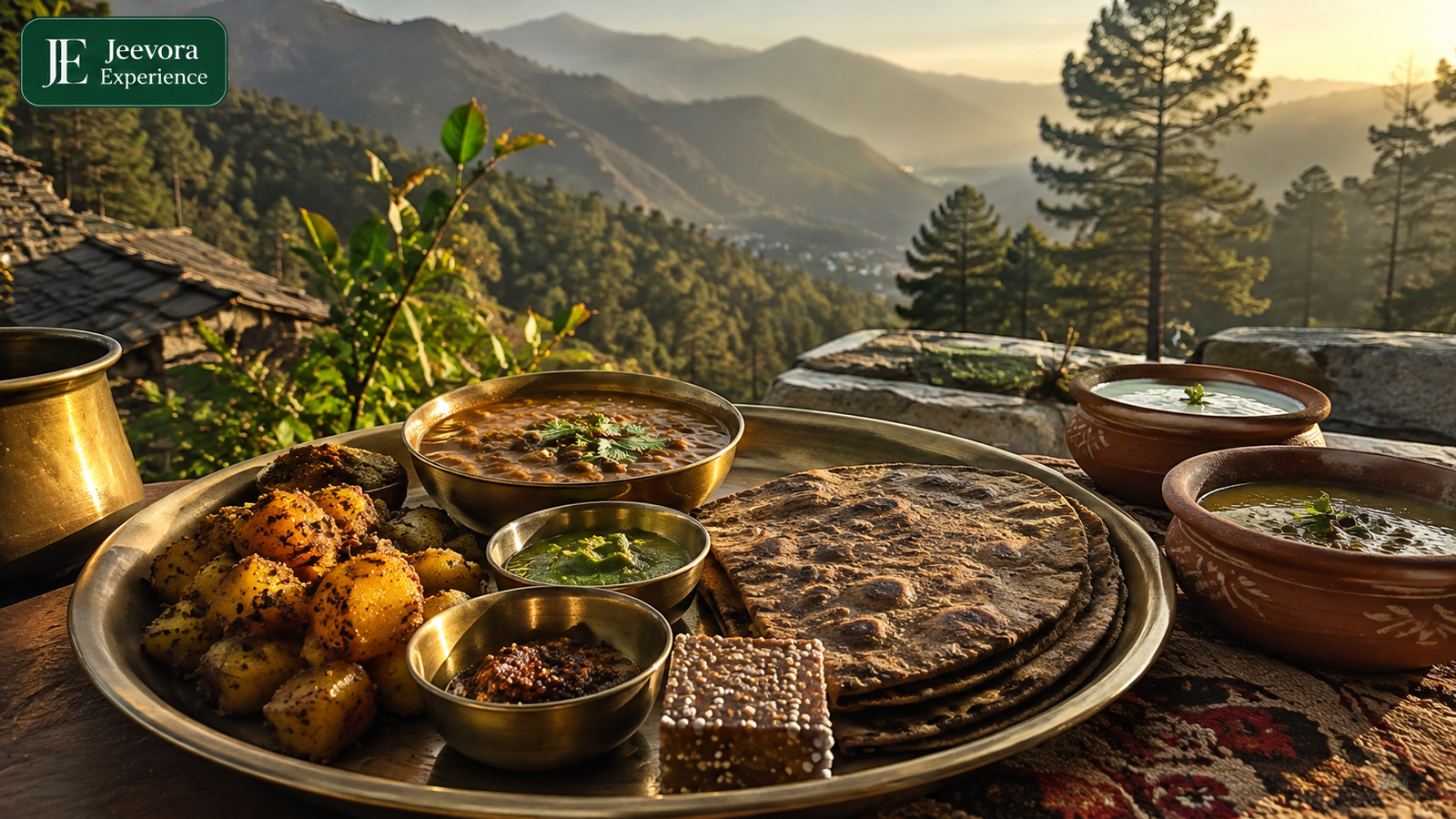
Kumaoni Cuisine 2026: Famous Kumaoni Food & Traditional Dishes of Uttarakhand
Kumaoni cuisine is one of the most distinctive food traditions of Uttarakhand. Developed around the Kumaon hills, its cooking reflects mountain life: seasonal ingredients, locally available grains and pulses, simple preparation and bold flavours created with herbs and spices. For travellers, trying Kumaoni food is more than adding another meal to an itinerary—it is a way to experience the culture of the region.
From Bhatt Ki Churkani and Aloo Ke Gutke to Kafuli, Ras and local breads, traditional Kumaoni dishes offer plenty of variety despite their often uncomplicated ingredients. This guide explains the most famous Kumaoni dishes, what makes the cuisine different, what to order, where travellers can look for authentic food and how to include a Kumaoni food experience in a Uttarakhand trip.
What Is Kumaoni Cuisine?
Kumaoni cuisine is the traditional food culture associated with the Kumaon region of Uttarakhand. Historically, mountain households relied heavily on ingredients that were practical to grow, store or source locally. Pulses, millets, vegetables, leafy greens and seasonal produce therefore play an important role.
The result is a style of cooking that is generally earthy, filling and ingredient-focused. Many dishes are not built around elaborate restaurant presentation. Their appeal comes from texture, local ingredients, warming spices and the connection between food and the mountain environment.
What Makes Kumaoni Food Different?
One reason traditional Kumaoni food stands out is its relationship with the geography and lifestyle of the hills. Food had to be practical, nutritious and suitable for ingredients available through different seasons.
- Strong use of local pulses and legumes
- Millets and traditional grains in several preparations
- Seasonal vegetables and leafy greens
- Simple cooking methods with distinctive tempering
- Use of regional herbs and spices
- Comforting, hearty textures rather than elaborate presentation
- Recipes that vary between households and parts of Kumaon
Because recipes are often regional and family-based, the exact ingredients and preparation can differ from one home, restaurant or village to another. Travellers should therefore think of Kumaoni cuisine as a broad culinary tradition rather than one fixed menu.
Famous Kumaoni Food You Should Try
1. Aloo Ke Gutke
Aloo Ke Gutke is among the most recognisable Kumaoni dishes. Potato pieces are cooked with regional spices and a traditional tempering, creating a simple but flavourful preparation that works well as a side dish or with local breads.
It is an excellent introduction to Kumaoni food because the ingredient is familiar while the seasoning gives it a distinctly Uttarakhandi character.
2. Bhatt Ki Churkani
Bhatt Ki Churkani is prepared using black soybeans, locally known as bhatt. The beans are cooked into a rich, comforting gravy and are valued as a traditional source of plant-based protein.
For travellers interested in authentic Kumaoni cooking rather than generic North Indian restaurant food, bhatt-based dishes are particularly worth looking for.
3. Kafuli
Kafuli is a traditional preparation made with leafy greens. Its earthy flavour and thick texture make it a classic example of mountain cooking based on seasonal vegetables.
The exact greens and preparation can vary. That variation is part of what makes regional home-style Kumaoni food interesting.
4. Ras
Ras is a traditional Kumaoni preparation made from a combination of pulses. It is slow-cooked to develop a deep flavour and is commonly enjoyed with rice.
Ras is especially appealing during cooler weather because it is warm, filling and rich in the flavours associated with traditional mountain kitchens.
5. Chainsoo
Chainsoo is another well-known Uttarakhand preparation made from roasted and ground pulses. Roasting gives the dish a distinctive depth and nutty character.
It is a good choice for travellers who want to explore the pulse-based side of Kumaoni and wider Uttarakhand cuisine.
6. Bhang Ki Chutney
Bhang Ki Chutney is a traditional chutney associated with Uttarakhand. Despite the name, the culinary preparation uses roasted hemp seeds rather than an intoxicating preparation. The seeds are ground with other ingredients to create a sharp, aromatic accompaniment.
It is commonly served alongside regional meals and can completely change the flavour of otherwise simple food.
7. Kumaoni Raita
Kumaoni Raita is a cooling accompaniment based on yoghurt and regional seasoning. Depending on the preparation, local vegetables or spices may be incorporated.
Its refreshing character makes it a useful contrast to warm, spicy and earthy Kumaoni dishes.
8. Bhaang Ki Chutney With Local Meals
One of the pleasures of Kumaoni dining is the way accompaniments are used. A traditional chutney can add acidity, aroma and heat to dishes that otherwise rely on simple ingredients. When available, ask the restaurant or host about its locally prepared chutneys.
9. Singal
Singal is a traditional Kumaoni sweet or snack made using fermented batter, with banana commonly associated with its preparation. It has a soft, distinctive texture and is different from the sweets commonly found in standard North Indian restaurant menus.
10. Arsa
Arsa is a traditional sweet preparation associated with Uttarakhand. It is particularly connected with festivals and special occasions and is worth trying when you find a genuinely local preparation.
Traditional Kumaoni Dishes at a Glance
| Kumaoni Dish | What It Is | Why Try It? |
|---|---|---|
| Aloo Ke Gutke | Spiced potato preparation | Simple, familiar and distinctly regional |
| Bhatt Ki Churkani | Black soybean-based curry | Classic Kumaoni pulse dish |
| Kafuli | Leafy-green preparation | Seasonal mountain flavours |
| Ras | Mixed-pulse preparation | Hearty and traditional |
| Chainsoo | Roasted pulse dish | Deep, earthy flavour |
| Bhang Ki Chutney | Traditional seed-based chutney | Distinctive local accompaniment |
| Kumaoni Raita | Regional yoghurt accompaniment | Refreshing with spicy meals |
| Singal | Traditional sweet/snack | Interesting local breakfast or snack experience |
| Arsa | Traditional sweet | Associated with festivals and occasions |
Kumaoni Food and Local Ingredients
The identity of Kumaoni food comes partly from the ingredients available in the hills. Pulses such as bhatt and other local legumes are important in traditional cooking, while millets and seasonal vegetables contribute variety.
Mountain cuisine also makes practical use of leafy greens, potatoes, spices, herbs and grains. Depending on the location and season, a traveller may encounter different versions of the same dish.
Bhatt
Bhatt is a traditional black soybean used in several Kumaoni preparations. It is one of the ingredients worth seeking out if you want to understand the protein-rich pulse dishes of the region.
Millets
Traditional mountain diets have long included grains and millets that are suited to hill agriculture. Local preparations can vary by household and destination.
Seasonal Greens
Leafy vegetables form the base of preparations such as Kafuli. Their availability can change with the season, making a local meal slightly different at different times of the year.
Best Kumaoni Food to Try in Nainital
Nainital is one of the easiest places for visitors to add Kumaoni food to a Uttarakhand holiday. Alongside the town's broader restaurant scene, travellers can look for eateries, hotels and local food experiences that specifically mention Kumaoni or Uttarakhandi cuisine.
If you are planning Nainital and Corbett together, our Nainital to Jim Corbett Guide can help you organise the route while leaving room for local food experiences.
Kumaoni Food Around Jim Corbett and Ramnagar
Travellers staying around Jim Corbett can also look for Kumaoni or Uttarakhandi dishes at selected resorts and local restaurants. Because Corbett attracts visitors from across India, not every restaurant will specialise in regional food, so it is worth asking specifically for local Kumaoni preparations.
Ramnagar is especially useful as a base because travellers can combine safari days with local dining and regional sightseeing. For a broader destination guide, see our Ramnagar Uttarakhand Travel Guide.
If you are looking for a café or casual dining option in town, our Best Cafes in Ramnagar guide can help you plan your food stops.
How to Order Kumaoni Food as a First-Time Visitor
If this is your first experience with Kumaoni cuisine, start with a combination of familiar and traditional dishes. Aloo Ke Gutke is an easy starting point, followed by one pulse-based dish such as Bhatt Ki Churkani, Ras or Chainsoo. Add a local chutney and raita if available.
At a homestay or traditional restaurant, ask the host which dishes are freshly prepared that day. Seasonal recommendations are often more useful than ordering a dish simply because it appears on an online list.
Is Kumaoni Food Spicy?
Kumaoni food can be flavourful and spicy, but there is no single level of heat across the cuisine. The use of chilli, spices, herbs and tempering varies by recipe and cook.
If you prefer mild food, tell the restaurant or host before ordering. Traditional dishes can often be adjusted for spice when they are cooked fresh.
Vegetarian Kumaoni Food
Vegetarian dishes form a major part of traditional Kumaoni food. Travellers can find several pulse-, vegetable-, grain- and dairy-based preparations without needing meat.
- Aloo Ke Gutke
- Bhatt Ki Churkani
- Kafuli
- Ras
- Chainsoo
- Kumaoni Raita
- Bhang Ki Chutney
- Traditional breads and grain-based preparations
This makes Kumaoni cuisine particularly approachable for travellers looking for regional vegetarian food.
Kumaoni Food for Families
Families travelling through Uttarakhand can introduce children to regional food gradually. Start with familiar ingredients such as potatoes, rice, yoghurt and mild preparations, then try stronger flavours and pulse-based dishes.
Do not order an entire meal of unfamiliar dishes at once if children are travelling with you. A balanced plate with familiar food plus one or two local specialities usually works better.
For family trip planning around Corbett, see our Jim Corbett With Family 2026 guide.
Kumaoni Food as Part of a Uttarakhand Itinerary
A food experience can be built naturally into a wider Uttarakhand trip. For example, a traveller can explore Kumaoni cuisine in Nainital or the Kumaon region and then continue towards Jim Corbett for wildlife and nature.
If you are building a multi-destination holiday, our Places to Visit Near Jim Corbett guide can help you identify destinations that fit around a Corbett stay.
For travellers interested in the broader Kumaon circuit, destinations such as Bhimtal, Mukteshwar, Ranikhet and Kausani can add different landscapes and local experiences to the trip.
When Is the Best Time to Try Kumaoni Food?
There is no single season for Kumaoni cuisine because different ingredients and preparations are available at different times of the year. Cooler months can be especially enjoyable for warm pulse-based dishes and hearty meals, while seasonal vegetables and local produce can change the menu at other times.
If food is part of a larger Corbett holiday, choose travel dates based on the complete experience rather than cuisine alone. Our Best Time to Visit Jim Corbett guide can help with the wildlife side of your planning.
Kumaoni Food vs Regular North Indian Food
Kumaoni cuisine shares some ingredients and cooking techniques with other North Indian food traditions, but its identity comes from its mountain ingredients, local recipes and regional preparation styles.
| Aspect | Kumaoni Cuisine | Typical North Indian Restaurant Food |
|---|---|---|
| Ingredients | Strong focus on regional pulses, greens, grains and seasonal produce | Broader commercial ingredient selection |
| Style | Home-style and regional | Often restaurant-oriented |
| Flavour | Earthy, aromatic and recipe-specific | Often richer and more standardised |
| Experience | Closely connected with local culture | More familiar pan-Indian dining |
How to Find Authentic Kumaoni Food
Authenticity is difficult to judge from a menu name alone. A better approach is to look for restaurants, homestays or hotels that specifically describe their food as Kumaoni or Uttarakhandi and ask which dishes are prepared traditionally.
- Ask whether the dish is locally prepared.
- Look for seasonal or home-style menus.
- Ask about the ingredients rather than ordering only by name.
- Try regional food at a trusted homestay when available.
- Prefer freshly prepared dishes over generic buffet versions when possible.
Travellers should also remember that recipes differ between families and regions. A dish tasting different from an online description does not automatically mean it is inauthentic.
Responsible Food Tourism in Uttarakhand
Local food is part of the cultural economy of Uttarakhand. Choosing local eateries, homestays and regional food experiences can help travellers connect more directly with the destination.
Avoid wasting food, respect local customs and ask before photographing people, kitchens or family-run food operations. If a host shares a traditional recipe or story, treat it as part of the experience rather than simply content for social media.
Planning a trip like this? Let our team help you build the perfect itinerary.
Sample Kumaoni Food Experience
| Meal | Possible Regional Choices |
|---|---|
| Breakfast | Singal or a local bread/grain preparation with tea |
| Lunch | Bhatt Ki Churkani or Ras, rice, vegetable and raita |
| Snack | Local seasonal preparation or traditional sweet |
| Dinner | Kafuli or Chainsoo with rice/local accompaniments |
| Accompaniment | Bhang Ki Chutney or another local chutney |
This is only an example. A genuine local menu will depend on the destination, season, cook and ingredients available that day.
Why You Should Try Kumaoni Cuisine on Your Next Uttarakhand Trip
Uttarakhand is often marketed through mountains, lakes, forests and wildlife, but its food is an equally valuable part of the destination. Trying Kumaoni cuisine gives travellers a closer look at how mountain communities have traditionally used local ingredients and adapted cooking to their environment.
So when you visit Nainital, Ramnagar, Jim Corbett or other parts of Kumaon, do not limit your food experience to familiar restaurant dishes. Ask for a local speciality, try one traditional preparation and let the region's food become part of your journey.
FAQs About Kumaoni Cuisine
What is Kumaoni cuisine?
Kumaoni cuisine is the traditional food culture of the Kumaon region of Uttarakhand, known for local pulses, grains, seasonal vegetables, leafy greens, regional spices and home-style preparations.
What are the most famous Kumaoni dishes?
Popular examples include Aloo Ke Gutke, Bhatt Ki Churkani, Kafuli, Ras, Chainsoo, Bhang Ki Chutney, Kumaoni Raita, Singal and Arsa.
Is Kumaoni food vegetarian?
Many traditional Kumaoni dishes are vegetarian, with pulses, vegetables, grains and dairy forming an important part of the cuisine.
Is Kumaoni food very spicy?
Spice levels vary by recipe and cook. Kumaoni food can be strongly flavoured without every dish being extremely hot.
Where can I try authentic Kumaoni food?
Look for local Kumaoni or Uttarakhandi restaurants, traditional homestays and hotels that specifically offer regional dishes. Asking what is freshly prepared and seasonal can help.
What Kumaoni dish should I try first?
Aloo Ke Gutke is an approachable starting point. You can then try a pulse-based dish such as Bhatt Ki Churkani, Ras or Chainsoo.
Can I find Kumaoni food in Nainital?
Yes. Nainital has restaurants and food experiences where travellers can look for regional Kumaoni or Uttarakhandi dishes.
Can I try Kumaoni food around Jim Corbett?
Yes. Selected resorts and local restaurants around the Corbett and Ramnagar region may offer Kumaoni or Uttarakhandi preparations. Ask specifically for regional dishes.
Plan Your Uttarakhand Food & Travel Experience With Jeevora Experience
Want to experience more than the usual tourist itinerary? Jeevora Experience can help combine Jim Corbett safaris, comfortable stays, sightseeing and regional Uttarakhand experiences into a practical trip based on your dates and travel style.
Plan your Uttarakhand journey: Contact Jeevora Experience or explore Jeevora Experience.



Comments