
JEEVORA EXPERIENCE • JIM CORBETT WILDLIFE GUIDE 2026
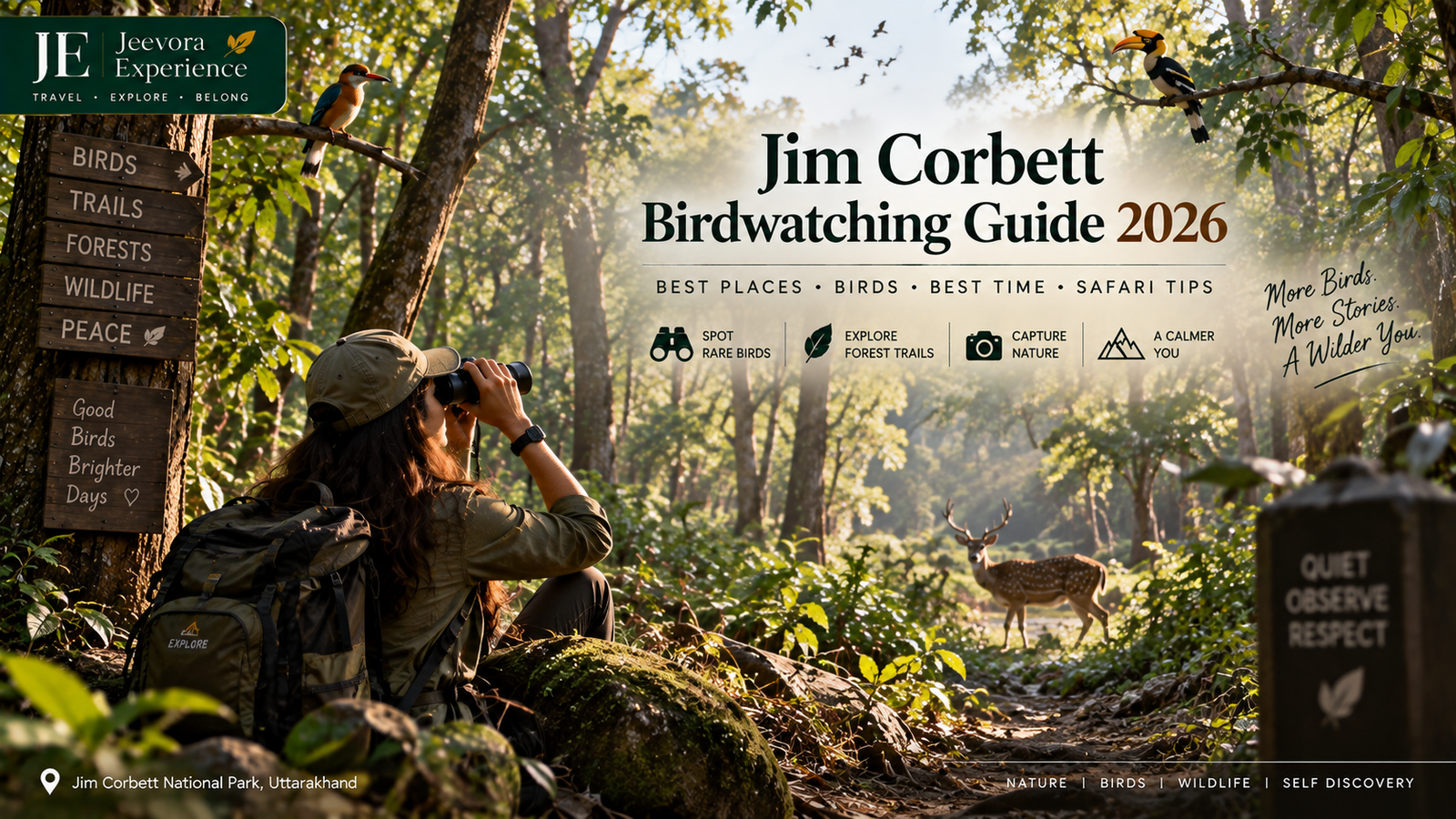
Jim Corbett Birdwatching Guide 2026: Best Places, Birds, Best Time & Safari Tips
The Jim Corbett Birdwatching Guide 2026 is for travellers who want to experience Corbett beyond tiger sightings. The forests, river landscapes and surrounding habitats support a rich variety of resident and migratory birds, making birdwatching a rewarding part of a wildlife holiday. With Jeevora Experience, you can combine birdwatching with safari, comfortable stays and a relaxed Corbett itinerary designed around your interests.
Why Go Birdwatching in Jim Corbett?
Jim Corbett is known worldwide for wildlife, but its birdlife adds another dimension to the forest experience. River corridors, mature trees, grasslands and forest edges create different habitats where you may observe water birds, raptors, kingfishers, hornbills, woodpeckers and many other species.
Uttarakhand Tourism highlights native and migratory birdwatching opportunities around the Ramnagar and Kosi River landscape. The wider Corbett region is also known for a large diversity of bird species. Actual sightings remain seasonal and unpredictable, so birdwatching should be approached as an observation experience rather than a guaranteed checklist.
Best Places for Birdwatching in and Around Jim Corbett
1. Kosi River
The Kosi River landscape is one of the most natural places to add birdwatching to a Corbett itinerary. Water, open riverbanks and nearby vegetation can create good opportunities to observe birds while also enjoying the scenery.
For travellers who want a broader nature itinerary, the Kosi River can be combined with hidden and offbeat places near Jim Corbett.
2. Sitabani Forest
Sitabani is a popular birdwatching area around the Corbett region and can suit travellers who want a quieter forest experience. It is particularly useful for a slower half-day outing focused on birds, forest landscapes and nature observation.
Sitabani is not part of the core Corbett Tiger Reserve safari zones, so do not treat it as interchangeable with a CTR safari permit. Read the detailed Sitabani Forest Guide before planning this experience.
3. Dhikuli & Ramnagar Surroundings
The areas around Dhikuli and Ramnagar can also provide birdwatching opportunities, especially around suitable vegetation, water and quieter surroundings. These locations can work well when you want to add short birding sessions before or after your main safari.
4. Forest Edges, Grasslands & Riverine Habitats
Birdwatching is not limited to one famous viewpoint. Different habitats can reveal different species. Keep an eye on forest edges, open clearings, tree canopies and water-rich areas while travelling with an authorised guide or naturalist.
Birds You May See in Jim Corbett
Corbett's birdlife includes a wide range of species and habitats. The following groups are particularly interesting for beginners:
- Kingfishers: Look around water and riverine habitats.
- Hornbills: Watch mature trees and listen for movement in the canopy.
- Woodpeckers: Their distinctive tapping can sometimes reveal their location.
- Raptors: Scan the open sky and high branches around forest clearings.
- Water Birds: River systems and other suitable water habitats can attract different species.
- Migratory Birds: Winter can add migratory visitors to the resident birdlife.
For a species-focused reference, you can also explore Jeevora's dedicated Birds of Jim Corbett guide. This article focuses more on how to plan the birdwatching experience rather than simply listing species.
Best Time for Birdwatching in Jim Corbett
Winter is particularly interesting for birdwatchers because migratory birds can add to the resident bird population. November to March is generally a useful period to consider when birdwatching is a major priority.
Spring and early summer mornings can also be rewarding because forest activity is often high during the cooler early hours. The exact experience depends on weather, habitat, access and natural conditions.
If you are choosing your travel dates based on multiple wildlife interests, compare the seasons in our Best Time to Visit Jim Corbett guide.
Morning vs Afternoon: When Should You Go Birdwatching?
Early Morning
Early morning is usually the most practical choice for dedicated birdwatching. Temperatures are more comfortable, the forest is quieter and bird activity can be rewarding. Morning light can also be helpful for photography.
Late Afternoon
Late afternoon can work for a relaxed birdwatching session, particularly around suitable riverine or forest-edge habitats. However, always plan around local access rules, safari timings and your return schedule.
Can You Combine Birdwatching with a Jim Corbett Safari?
Yes. In fact, combining the two can create a more complete wildlife experience. A safari gives you access to designated forest routes, while a separate birdwatching session can allow you to slow down and focus more deliberately on smaller species.
Your safari zone should be selected according to your travel dates, official availability and the type of experience you want. Start with the current Jeevora Experience Jim Corbett Safari page and verify final availability before booking.
You can also read the Jim Corbett Safari Zones Guide to understand the differences between the main safari areas.
Jim Corbett Birdwatching Tips for Beginners
- Start early: Early hours can offer comfortable conditions and active birdlife.
- Carry binoculars: Many birds stay high in trees or across open spaces.
- Listen before looking: Calls and movement can help you locate birds.
- Stay quiet: Loud conversations can disturb birds and reduce your chances of observation.
- Be patient: Birdwatching rewards slow observation rather than rushing from one place to another.
- Use a field guide: A bird guide or identification app can help beginners identify species after the sighting.
- Follow your guide: Use authorised routes and respect all forest rules.
- Never chase a bird: Do not approach nests or disturb birds for a photograph.
Bird Photography Tips in Jim Corbett
Bird photography requires patience more than expensive equipment. A telephoto lens can help when birds are distant, while a fast shutter speed is useful for birds in flight.
- Keep your camera ready before the bird moves.
- Use natural light whenever possible.
- Avoid flash around wildlife.
- Do not ask a driver or guide to chase or block a bird.
- Photograph behaviour and habitat instead of only close-up portraits.
- Respect nesting and breeding areas.
For a more detailed photography-focused trip, see the Jim Corbett Wildlife Photography Guide 2026.
How Many Days Do You Need for a Birdwatching Trip?
If birdwatching is only one part of your holiday, 2 nights and 3 days can work well. You can combine one safari with a dedicated birdwatching session and a few relaxed local experiences.
For serious birdwatchers, photographers or travellers who prefer slow travel, 3 nights and 4 days provides more flexibility. It allows you to avoid packing every activity into one morning and gives you additional time to observe different habitats.
Sample 3-Day Jim Corbett Birdwatching Itinerary
Day 1: Arrival → Resort → Kosi River Birdwatching
Arrive in Ramnagar, check in and keep the afternoon relaxed. If local access conditions permit, spend some time around a suitable Kosi River area and observe birds without rushing.
Day 2: Early Safari → Rest → Dedicated Birdwatching Session
Take an early morning safari. After breakfast and rest, plan a separate birdwatching experience around a suitable forest or riverine location with an authorised local guide.
Day 3: Sitabani / Local Nature Experience → Departure
If your departure timing allows, use the morning for Sitabani or another suitable local nature experience. Otherwise, enjoy breakfast and depart without making the final day unnecessarily hectic.
What to Pack for Birdwatching in Jim Corbett
- Compact binoculars
- Camera and telephoto lens, if required
- Extra batteries and memory cards
- Comfortable walking shoes
- Weather-appropriate layered clothing
- Sunscreen and sunglasses
- Water bottle
- Government-issued identification
- Small field guide or offline bird-identification reference
For a broader trip checklist, use the Jim Corbett Packing List before leaving home.
Birdwatching Etiquette & Wildlife Rules
The objective of birdwatching is observation, not interference. Keep a respectful distance, avoid loud noises and never try to attract birds through food, calls or other artificial methods.
During a safari, follow the instructions of the authorised guide and driver. Do not leave the vehicle unless the designated activity and local rules specifically allow it. Forest access, routes and activities can change according to regulations and conditions.
Plan a Birdwatching-Focused Corbett Trip with Jeevora Experience
At Jeevora Experience, we believe a Corbett trip should be planned around the traveller, not a fixed checklist. If birds, photography and quiet forest experiences are your priority, your itinerary can be structured differently from a standard tiger-focused holiday.
We can help you plan the right combination of accommodation, safari assistance, local sightseeing and nature experiences around your travel dates and preferences.
Planning a trip like this? Let our team help you build the perfect itinerary.
Ready to Explore Corbett Beyond Tigers?
Share your travel dates and preferences with Jeevora Experience and plan a personalised wildlife and birdwatching itinerary.
Enquire NowFAQs About Birdwatching in Jim Corbett
How many bird species can be found in Jim Corbett?
The wider Corbett region is known for a very high diversity of resident and migratory birds. Exact counts vary by source and classification, so birdwatchers should treat published numbers as regional estimates rather than a guarantee of what they will see during one trip.
What is the best month for birdwatching in Jim Corbett?
November to March is particularly useful for birdwatching because migratory birds can add to the resident birdlife. Early mornings in spring and early summer can also be rewarding.
Is Sitabani good for birdwatching?
Yes. Sitabani is recognised as a birdwatching destination around the Corbett region and is suitable for travellers looking for a quieter forest experience.
Do I need a professional birdwatching guide?
Beginners can enjoy birdwatching independently in suitable permitted areas, but a knowledgeable local guide or naturalist can make identification easier and help you understand calls, habitats and responsible wildlife behaviour.
Can birdwatching be included in a Jim Corbett package?
Yes. Birdwatching can be added alongside safari, accommodation and selected local experiences. The exact activity should be planned around current access, permissions, weather and your travel dates.



Comments